1 April 2025
Of Stones and Time: The Story of José António Uva
Barrocal was a place slowly disappearing — until José António Uva returned. Fourteen years of restoration. One architect. The decision that a place is allowed to remain itself.
Before São Lourenço do Barrocal became one of Portugal's most quietly celebrated hotels, it was a place slowly disappearing.
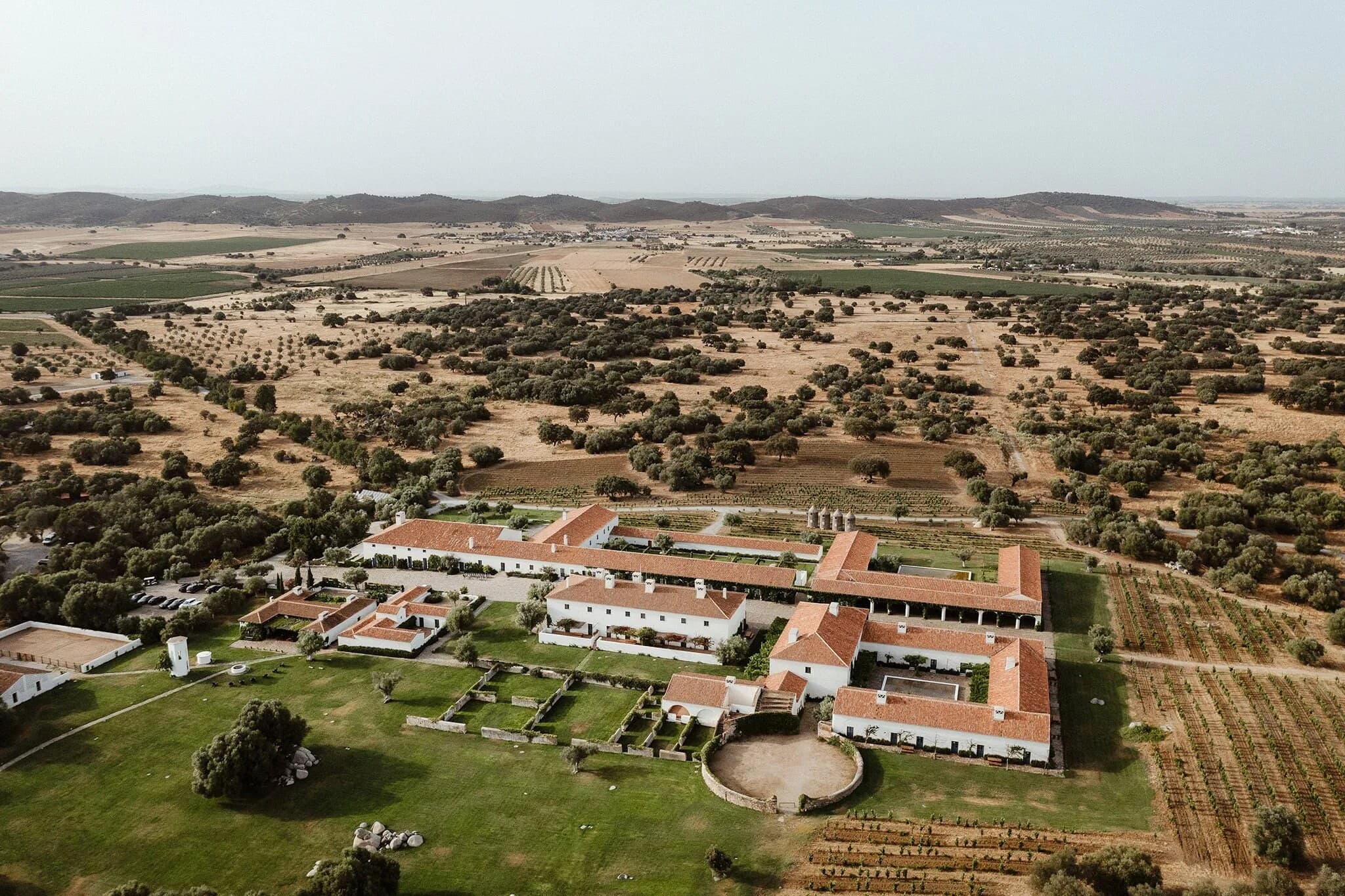
Long before guests arrived for wine tastings, horseback rides or evenings under star-filled skies, the estate existed as a small agricultural village in the Alentejo countryside. Workers lived in whitewashed houses along a cobbled street, olive presses operated in the barns and vineyards stretched across the landscape. For generations, the land had remained within the same family.
Then history interrupted.
Following Portugal's Carnation Revolution in 1974, large agricultural estates in Alentejo were nationalised. Like many others, Barrocal was gradually abandoned. Buildings deteriorated, roofs collapsed and nature slowly reclaimed what had once been a functioning community.
José António Uva was born in exactly that year.
His story and the story of Barrocal seem strangely intertwined from the beginning.
As a child, he spent holidays near the estate with his family. Although Barrocal itself had fallen into decline, it never disappeared emotionally. His memories were not about architecture or wine or future hotel concepts. They were simpler than that: climbing over granite rocks with his brother, exploring the land and feeling the scale of the place around him.
Those granite formations — the Barrocals — would eventually give the estate its identity.
But for a long time, José António Uva's life moved in a completely different direction.
He attended an American school in Lisbon, later studied in Paris and eventually worked in London as an investment banker. Looking at his path from the outside, everything seemed to point toward an international career — cities, finance and a life far removed from rural Portugal.
Then, at twenty-six, he returned.
Initially it was not meant to become a life project. He took what was essentially a break from his previous life and moved back to Barrocal for a sabbatical. At the time he was living alone in the only building on the estate that still had a roof — a former gardener's house that today serves as the pool house.
Everything else around him had become ruins.
Many people would have seen a failed project.
José António Uva saw a question.
What happens when a place disappears? And more importantly: can it be brought back without losing its identity?
He often describes his decision as a choice between two possibilities: allowing Barrocal to slowly decay or rethinking the entire estate as something capable of surviving into the future.
Interestingly, he never approached the project as a traditional hotel developer.
He approached it almost like research.
Over the following years he spoke with historians, archaeologists, geologists, agronomists, landscape specialists and biologists. Rather than asking how to build a luxury hotel, he tried to understand what Barrocal had been before.
Only afterwards did architecture enter the conversation.
For the restoration, he invited Portuguese architect Eduardo Souto de Moura — later a Pritzker Prize winner — to collaborate on the transformation. But there was one condition:
The place should not become something new.
It should remain itself.
That decision changed everything.
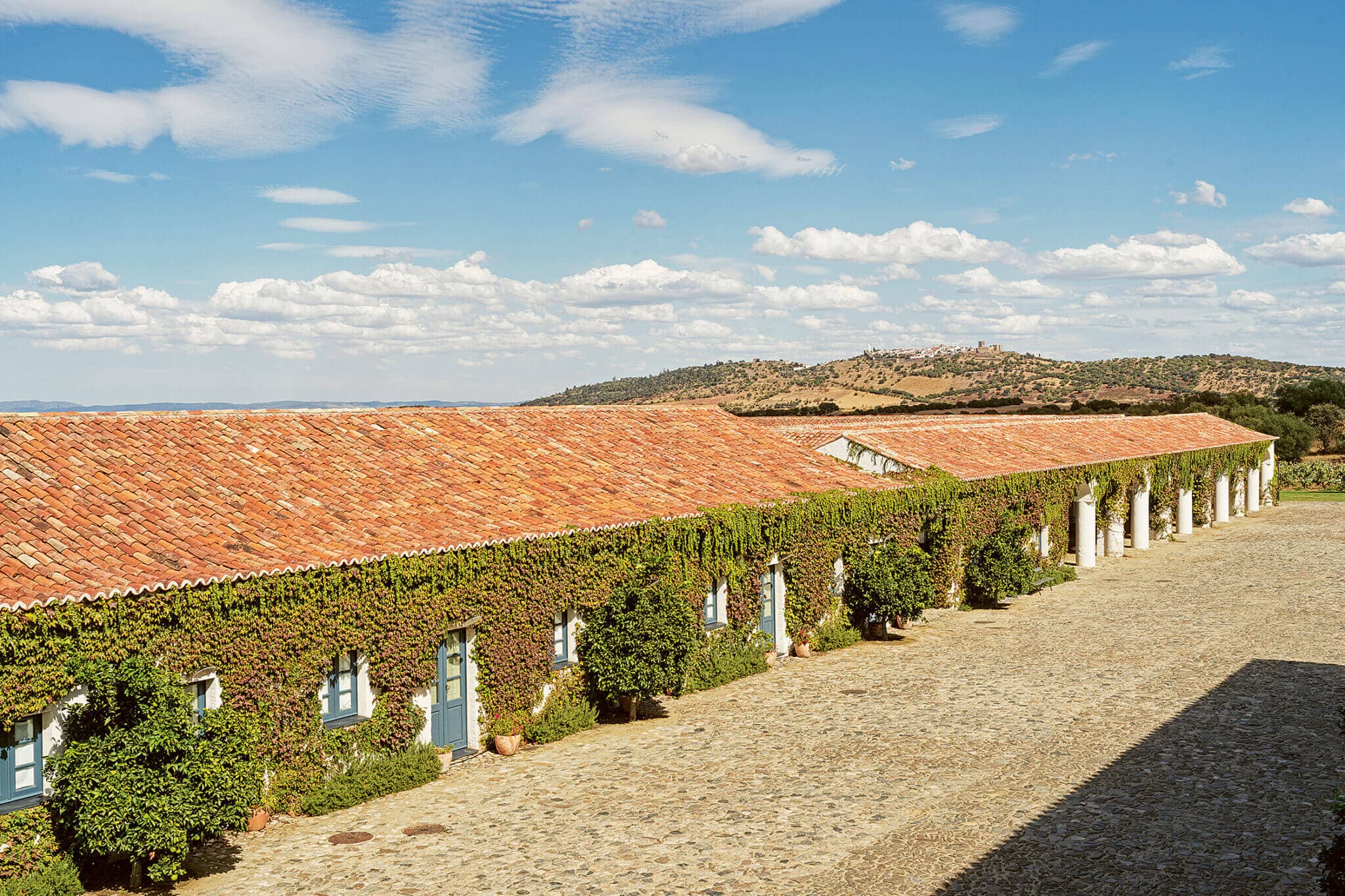
The original village structure remained intact. Former workers' homes became guest cottages. Old agricultural buildings found new purposes. The olive oil mill became the hotel bar. The barns evolved into spaces for gathering and dining.
Even the materials required patience.
Old roof tiles had to be collected across Alentejo because many of them were no longer produced. Terracotta floors were recreated locally. Hundreds of thousands of bricks were used throughout the restoration.
The process lasted fourteen years.
Fourteen years for a project that many would have tried to finish in two.
And perhaps that explains why Barrocal feels different today.
Because it was never trying to become fast luxury.
José António Uva also understood that restoring buildings alone would never be enough. The landscape itself had to remain alive.
Today vineyards continue producing wine. Olive trees still grow across the estate. Organic gardens supply ingredients to the kitchens. Local craftspeople contributed furniture, ceramics, textiles and objects. Even the interiors, designed by his wife Ana Anahory, rely heavily on Portuguese makers and materials.
Rather than creating a stage set version of rural life, Barrocal became something else:
A functioning ecosystem.
Perhaps that is why guests often struggle to describe the place accurately.
Technically it is a hotel.
But it rarely feels like one.
There are no grand entrances demanding attention. No oversized statements. No sense that someone is trying too hard to impress.
Instead there is space.
Stone.
Silence.
Time.
And perhaps the most surprising thing about José António Uva's story is that it was never really about hospitality at all.
It was about preserving a place.
The hotel simply became the way to make that possible.
Photography by Pedro Guimarães
Related hotels
 Monsaraz, Alentejo, Portugal
São Lourenço do Barrocal
Agro-tourismslow & grounded — Portugal as it truly isSão Lourenço do Barrocal is a 19th-century working monte spanning 780 hectares of Alentejo landscape between the medieval hilltop village of Monsaraz and the Alqueva reservoir. Architect José António Uva gently transformed his family's estate into one of Portugal's finest hideaways without surrendering an ounce of its soul. The estate still works: its own olive groves, vineyards, sheep's cheese, horses. The olive oil, wine and cheese on the breakfast table all come from Barrocal itself. The 22 rooms and cottages are spread across the old estate — each a small private territory with its own outdoor space, looking onto the courtyard, landscape or the village of Monsaraz.