
Spain
Menorca
The Balearic island that chose to stay wild.
Best season
May–June / September–October
Perfect stay
5–8 days
Closest airport
Menorca Airport (MAH) · 5 km from Maó
Overview
What makes Menorca special
- UNESCO Biosphere Reserve since 1993 — more than half the island is protected land
- 180 km of coastline with some of the clearest, most uncrowded beaches in the Mediterranean
- Much quieter than Mallorca or Ibiza — deliberately low-rise, low-key
- Strong cycling and walking culture — the Camí de Cavalls circles the entire island
- Distinct food culture: caldereta de llagosta (lobster stew), local gin, Mahon cheese
- Two very different coasts: calm turquoise south, wilder windswept north
The Story
Menorca made a different decision from its neighbours. While Mallorca built itself into a mass-market destination and Ibiza traded on excess, Menorca opted for protection. In 1993 it became a UNESCO Biosphere Reserve. Construction was limited. The fishing villages stayed fishing villages.
The result is an island that feels genuinely unhurried — uncrowded beaches, whitewashed towns, a coastline path that takes you around the entire island on foot or by bike. The Camí de Cavalls, the old bridle path used by soldiers to patrol the coast, now runs 185 km of wild shoreline.
The food is serious and specific: caldereta de llagosta from Es Mercadal is what people drive across the island for, the local gin (Xoriguer, distilled since the 18th century) is genuinely good, and Mahon cheese — soft, slightly salty, pressed in cloth — is the island's most famous export for a reason.
Menorca rewards people who move slowly. The best beaches require effort to reach. The best restaurants are quiet and undiscovered. It's an island for the curious rather than the demonstrative.
Don't Miss
Camí de Cavalls
The ancient 185 km coastal path circling the entire island — walkable in 8–10 days, or rideable by bike. Wild, empty, one of the best long-distance trails in Spain.
Maó (Mahón)
The capital, set above one of the deepest natural harbours in the Mediterranean. A working town — gin distillery, covered market, Georgian architecture left by the British.
Cala Macarella
The island's most photographed cove — turquoise water, pine-covered cliffs, a beach that requires a 20-minute walk to reach. Worth every step.
Fornells & the lobster stew
A small fishing village on the north coast — whitewashed, unhurried. The caldereta de llagosta here is what the entire island recommends. Book ahead.
Things To Do
Cycle the island's interior
Quiet country roads through farmland, dry stone walls, working fincas — very different from the coast. Hire bikes in Ciutadella or Maó.
Stay Here
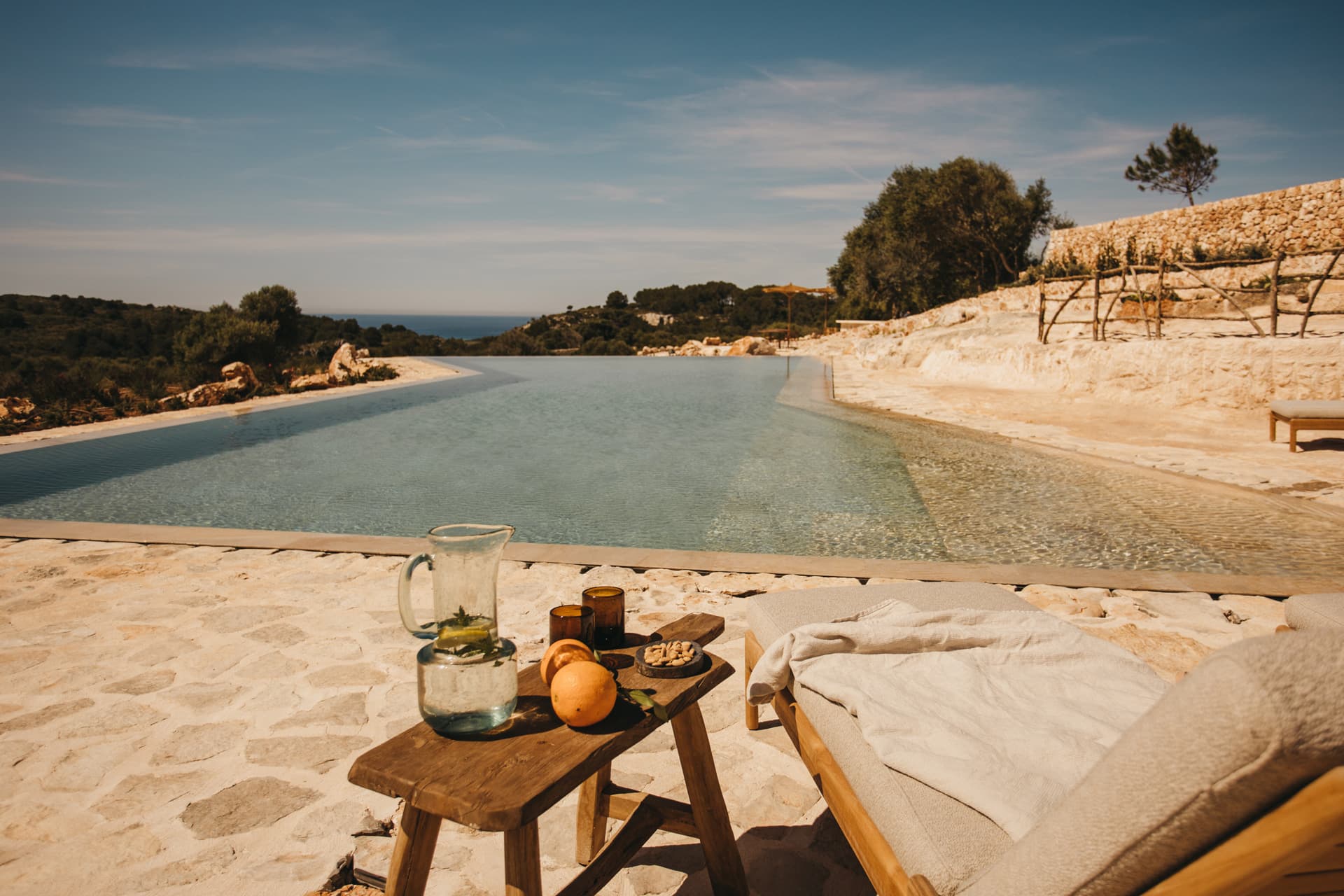 N°01Menorca · Spain
Son Blanc Farmhouse
RegenerativeGroundedMediterranean wild130 hectares of protected Menorcan farmland — and 14 rooms inside a restored stone farmhouse.
The CinCin Notes
Menorca is the most considered choice in the Balearics. It's the island you go to when you're done with the noise — when you want clear water, empty paths, a fishing village that hasn't been turned into something else.
The decision the island made in 1993 (UNESCO Biosphere Reserve) is visible everywhere: no high-rise hotels, no strip development, coastline that's still largely pristine. That restraint is the island's greatest asset.
Come in May, June or September. The beaches are accessible, the temperatures are right, and the island isn't full. July and August are busy — still beautiful, but the best coves get crowded by midday.
Son Blanc operates on 130 hectares of protected farmland in the island's interior — a regenerative farming retreat that understands Menorca better than almost any other place to stay.