A Hotel You Cannot Reach by Car
Leaving the car in Lana, the cable car up, and what a stay at vigilius on the Vigiljoch looks like once you arrive.
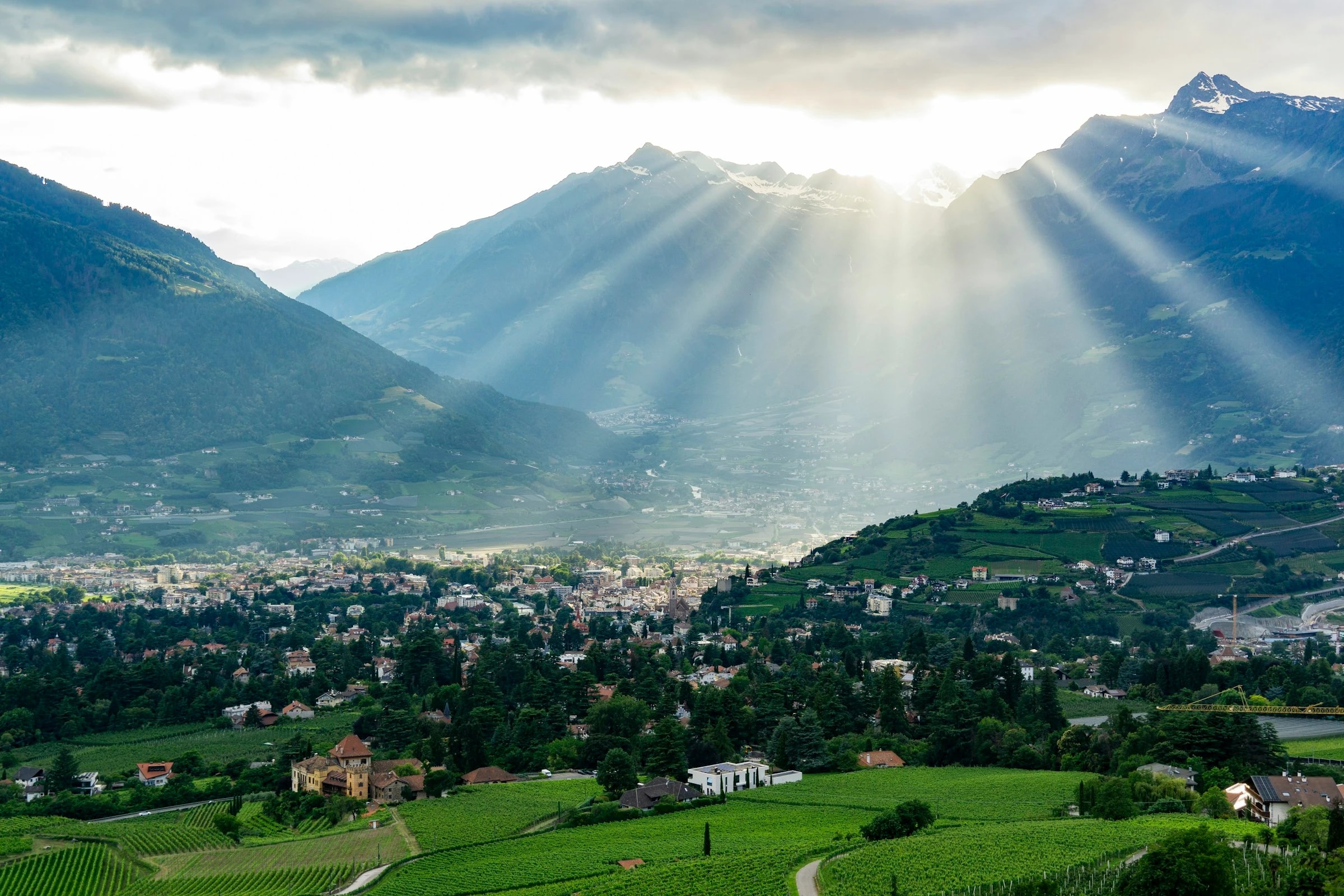
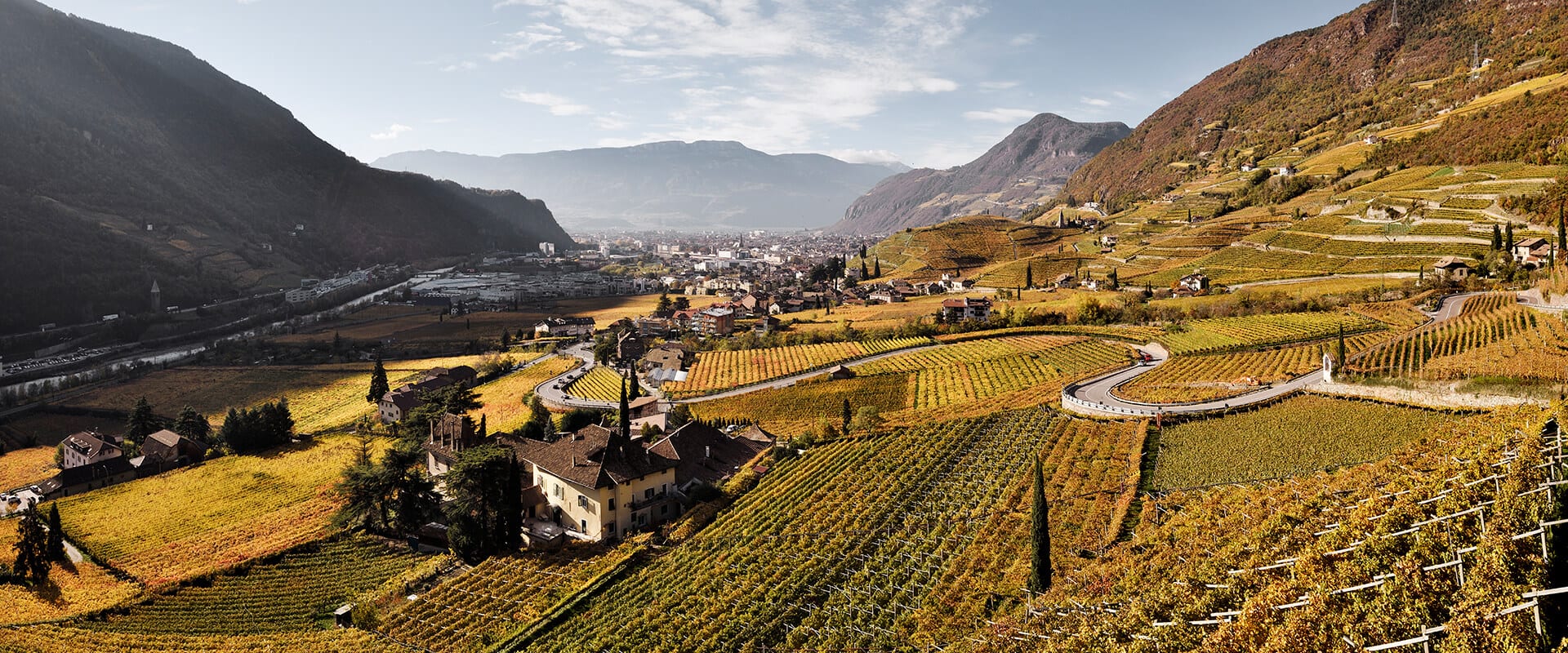
Most hotels begin with an arrival. At vigilius mountain resort it begins with a farewell: the moment you leave the car behind. Hotel guests park for free in the garage by the valley station in Lana, and from there a small cable car climbs to the Vigiljoch in about six minutes. No road leads up to the hotel, and the plateau at the top is car-free. Below the cabin, the orchards and vineyards of the valley grow smaller.
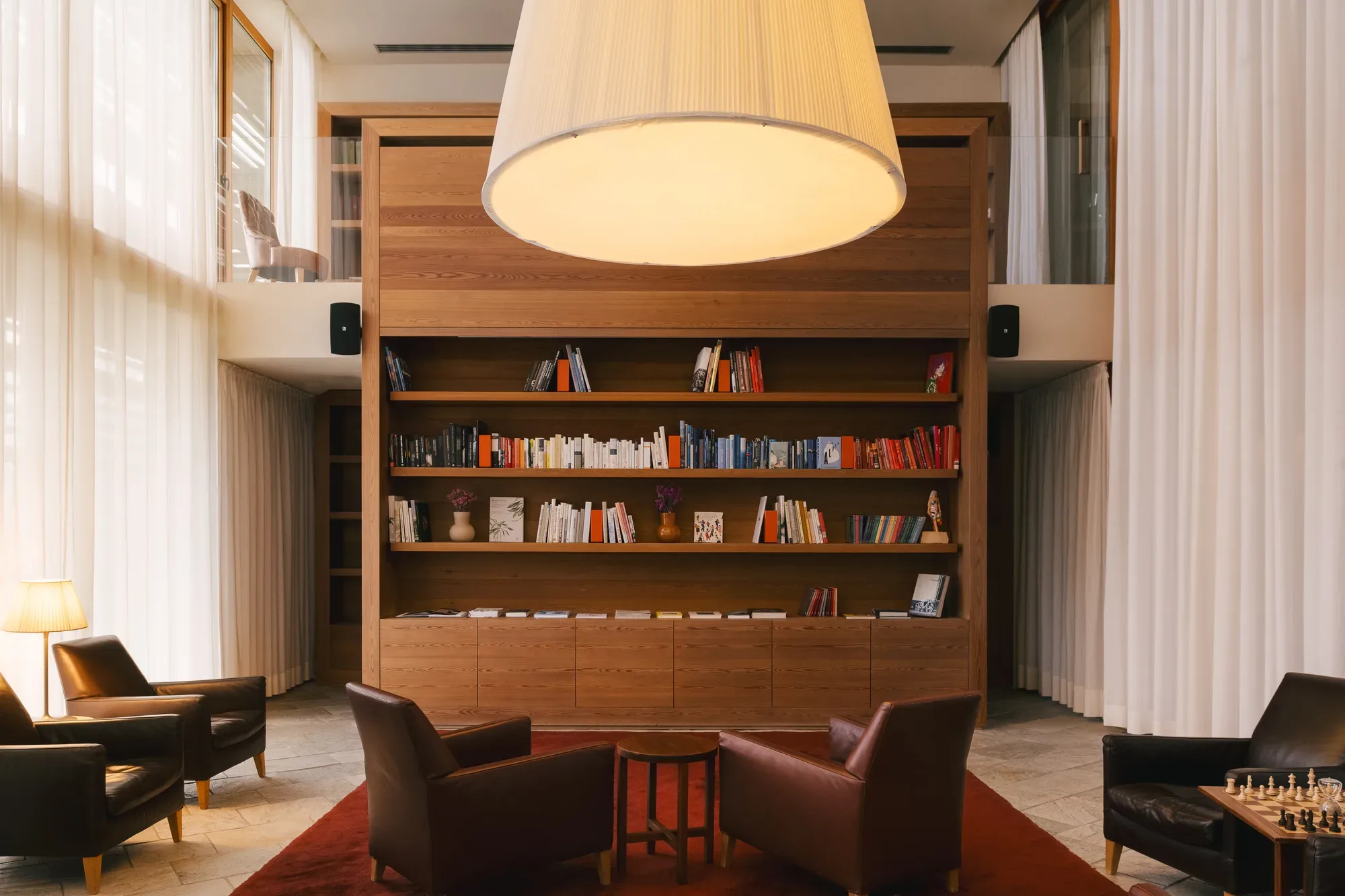
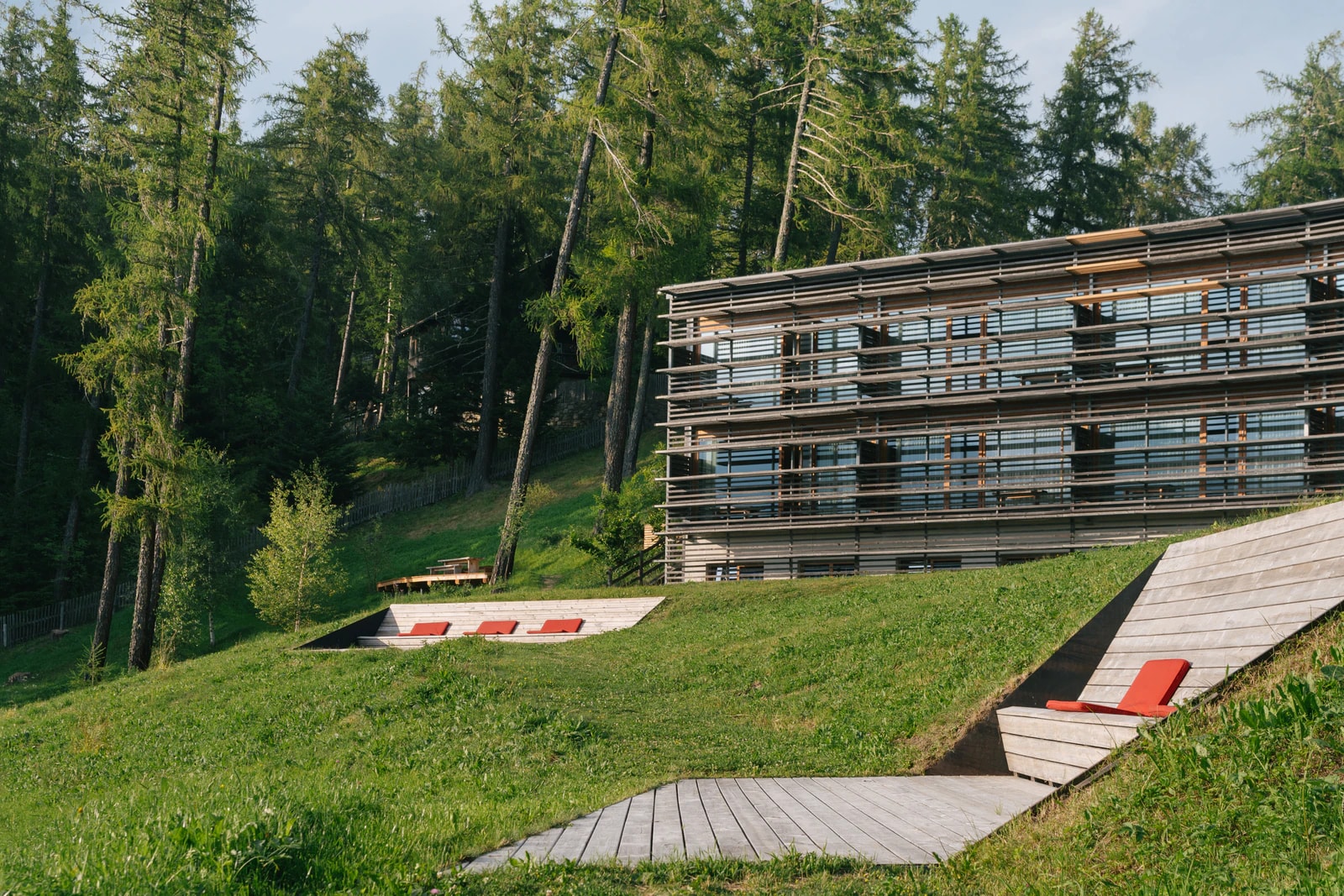
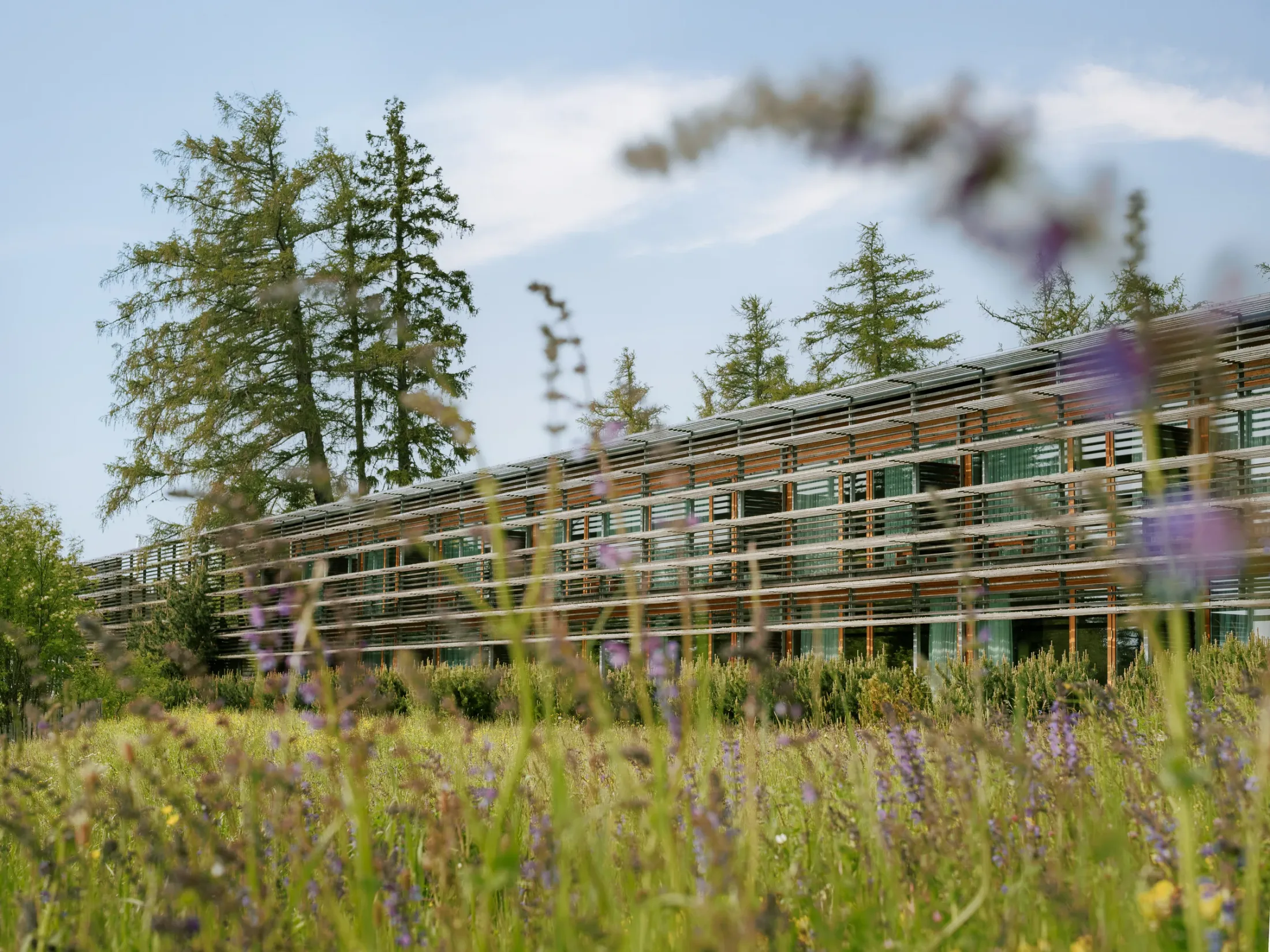
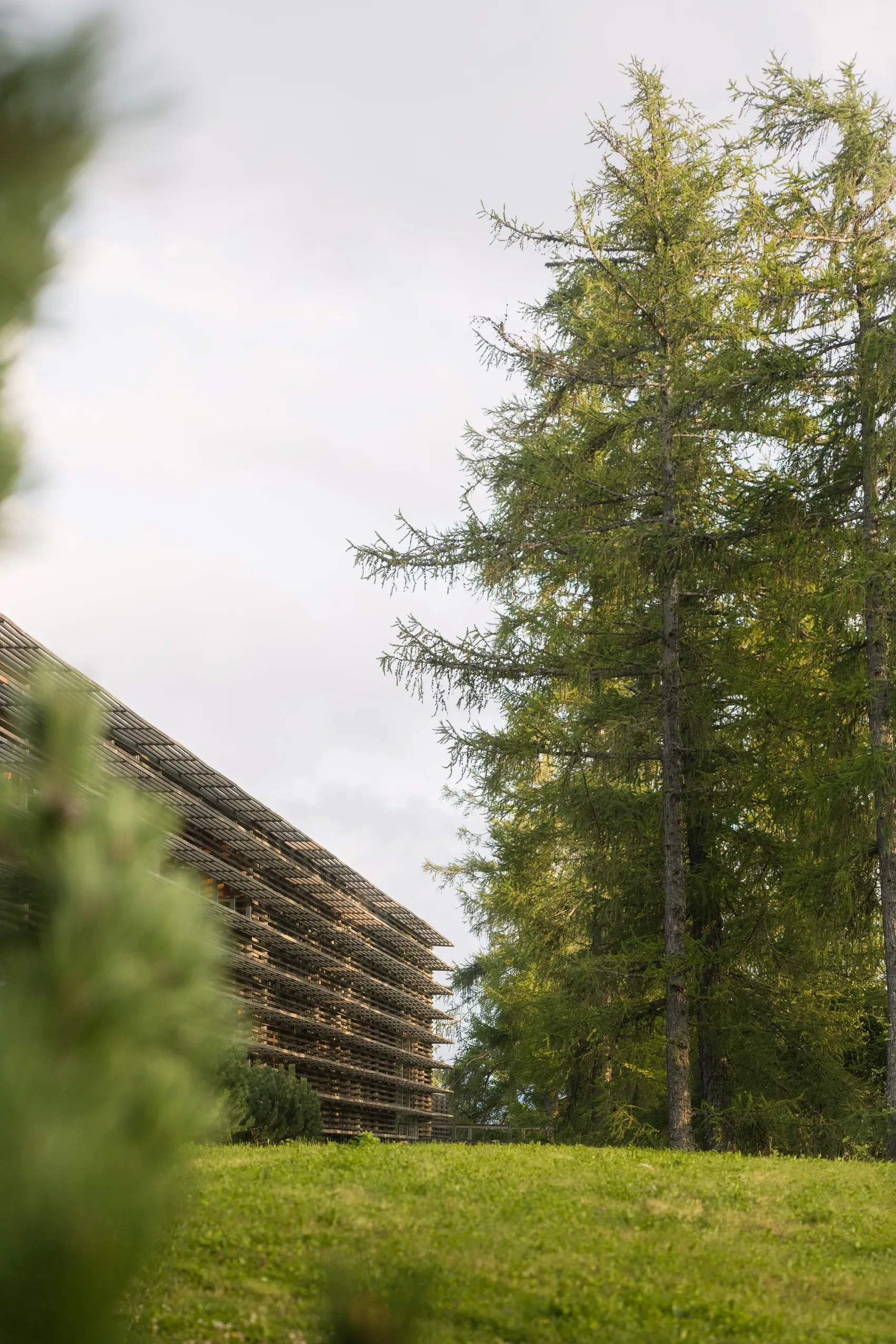
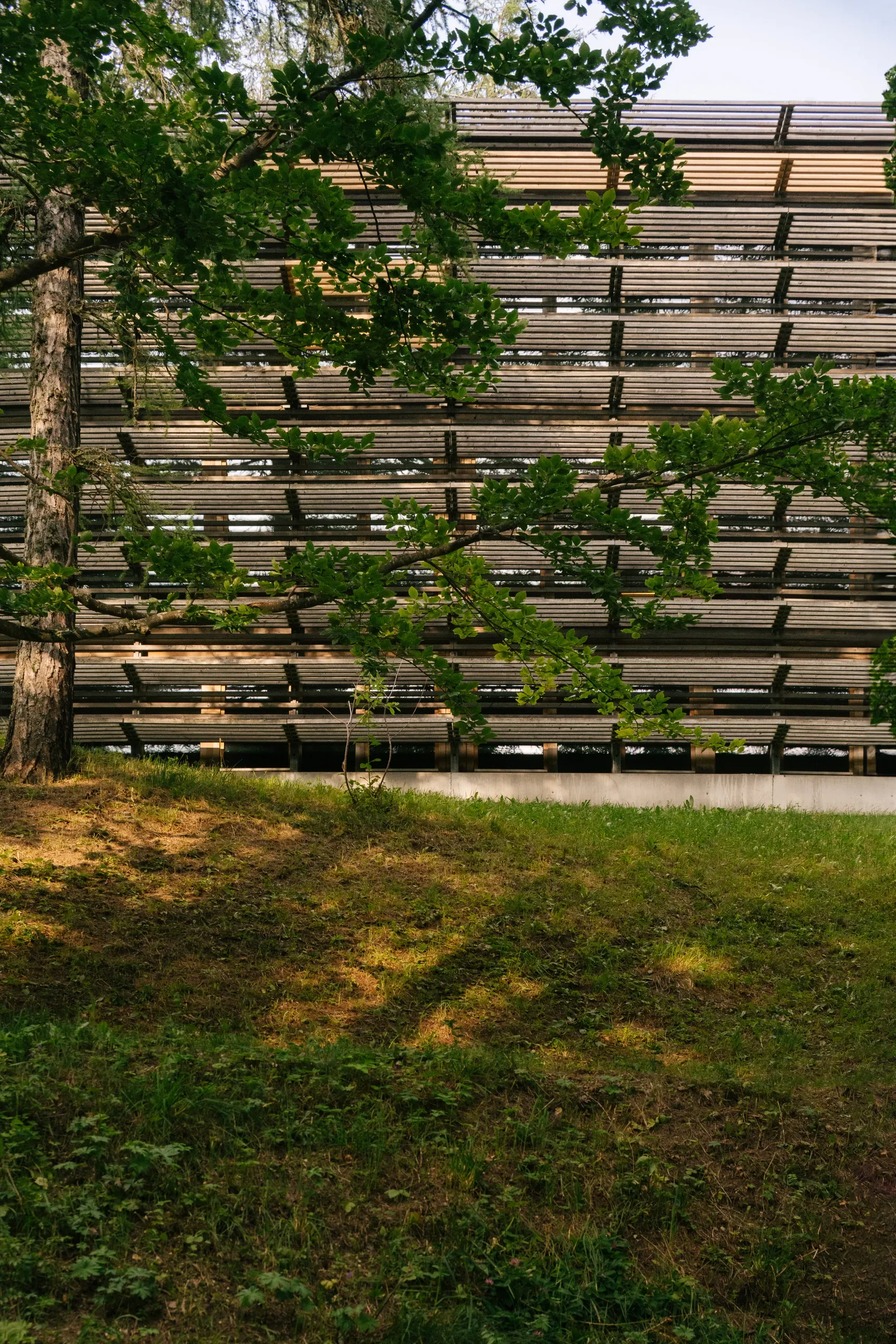
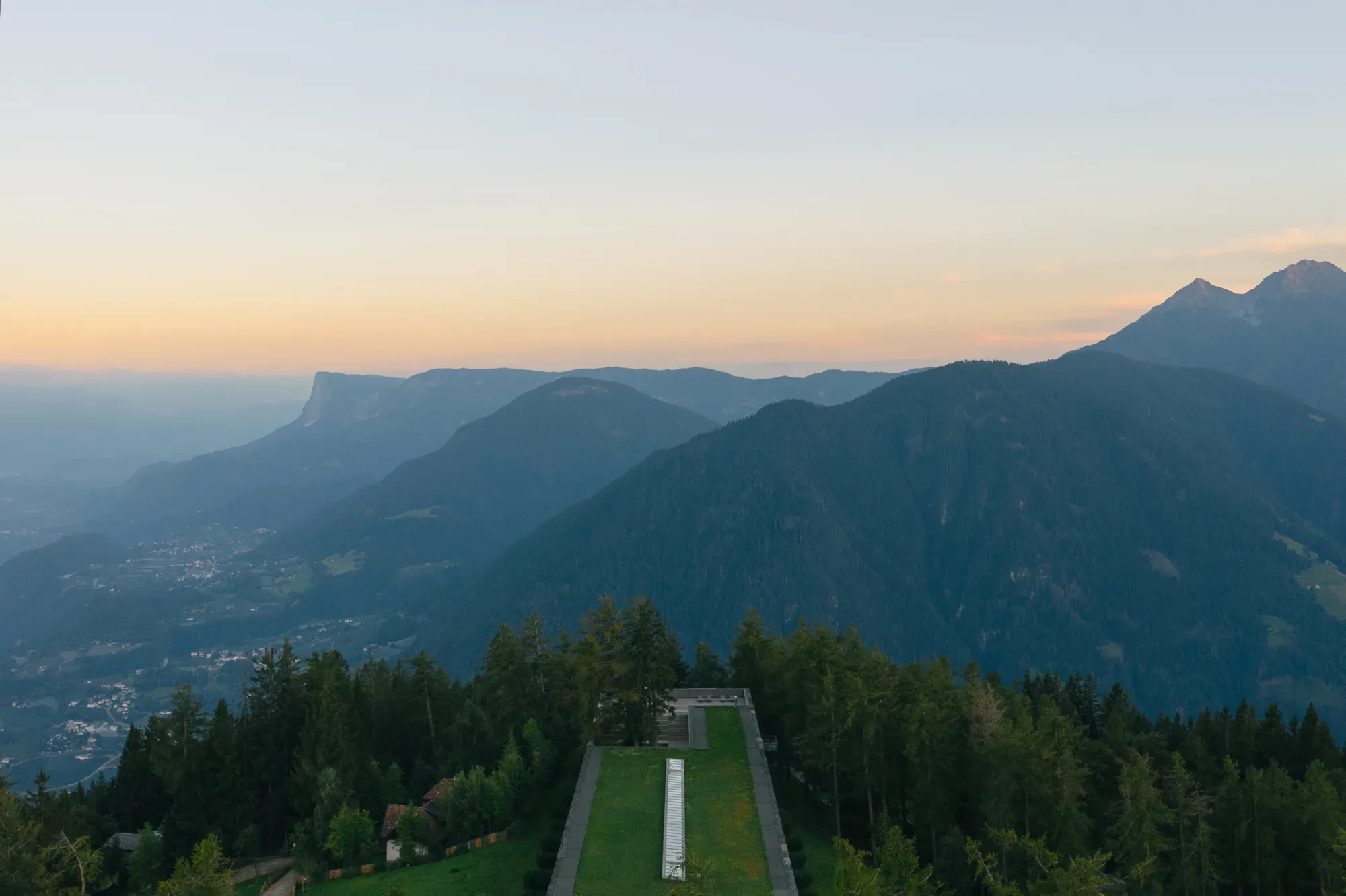
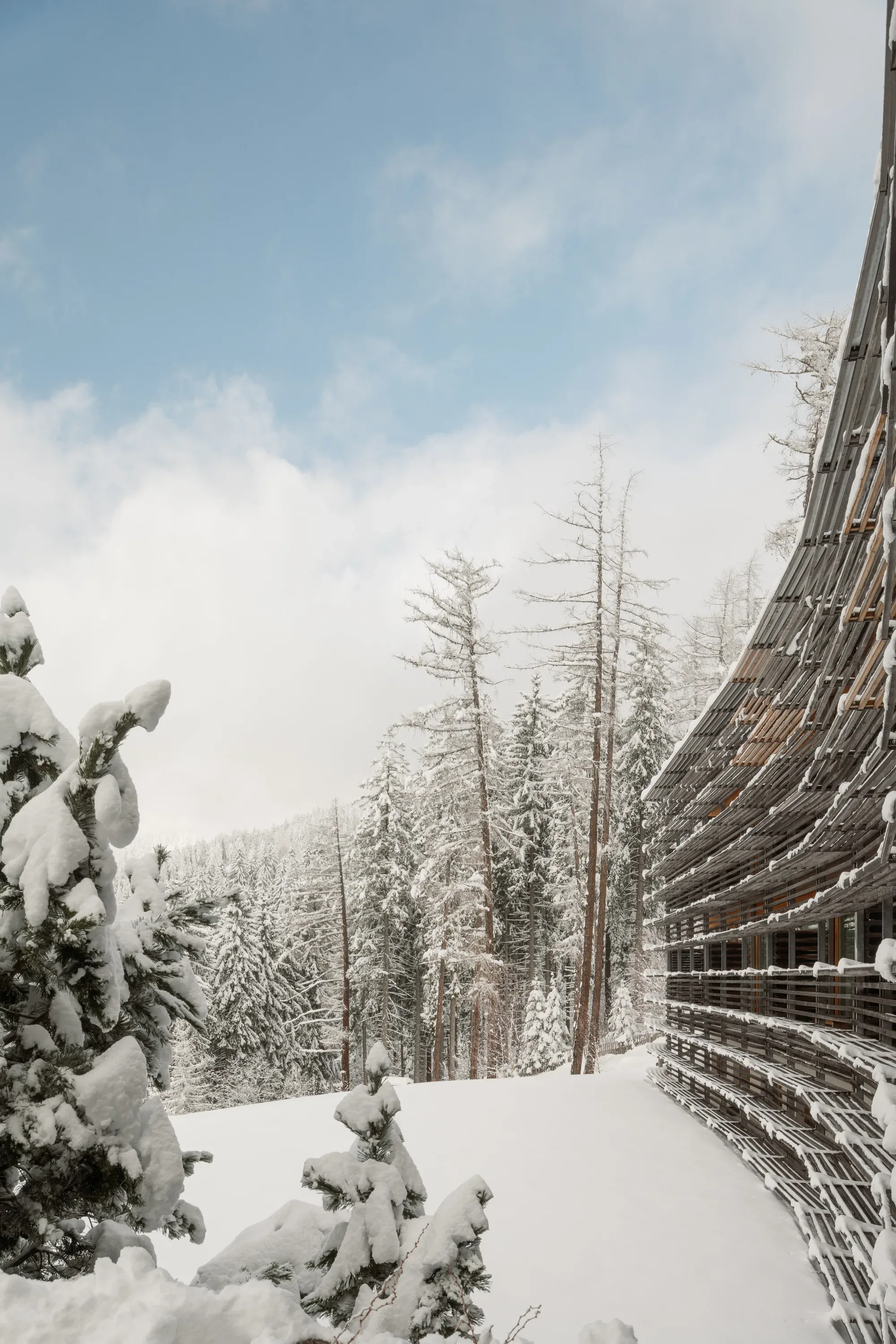
The hotel stands at around 1,500 metres at the edge of the forest, a long, low building of larch wood, glass, natural stone and clay. Owner Ulrich Ladurner and architect Matteo Thun planned it around the motto “Eco, not ego”.
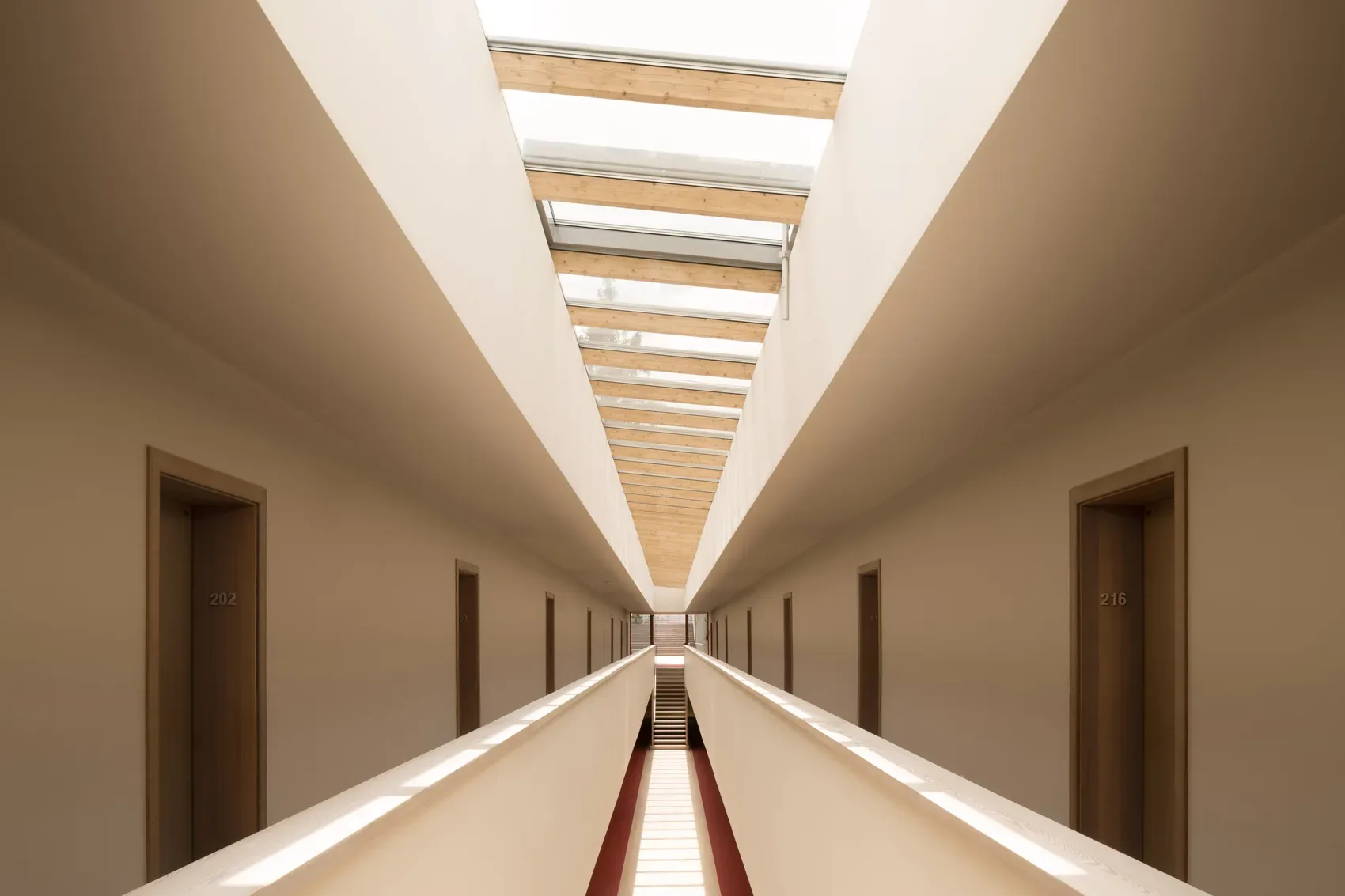
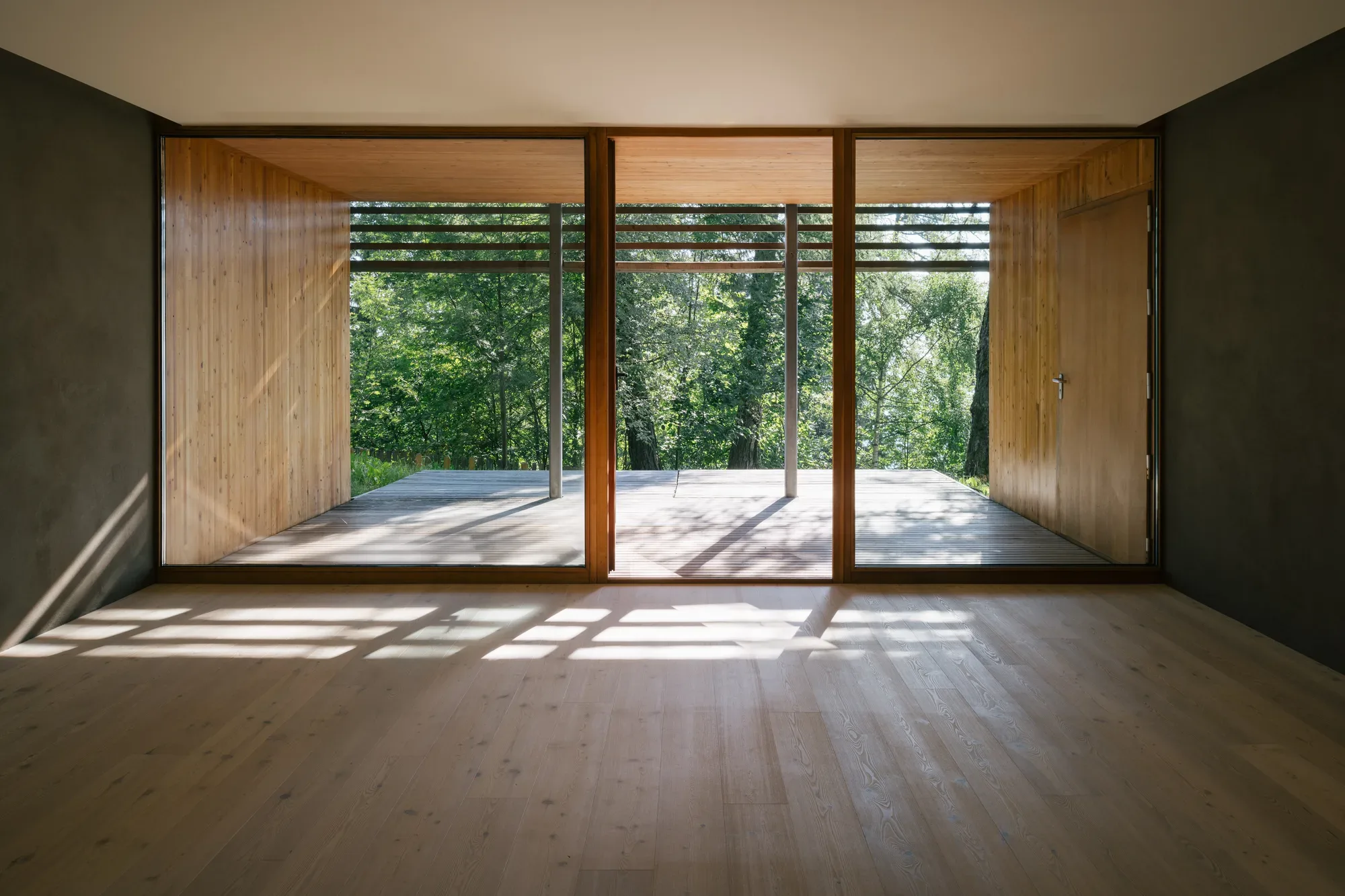
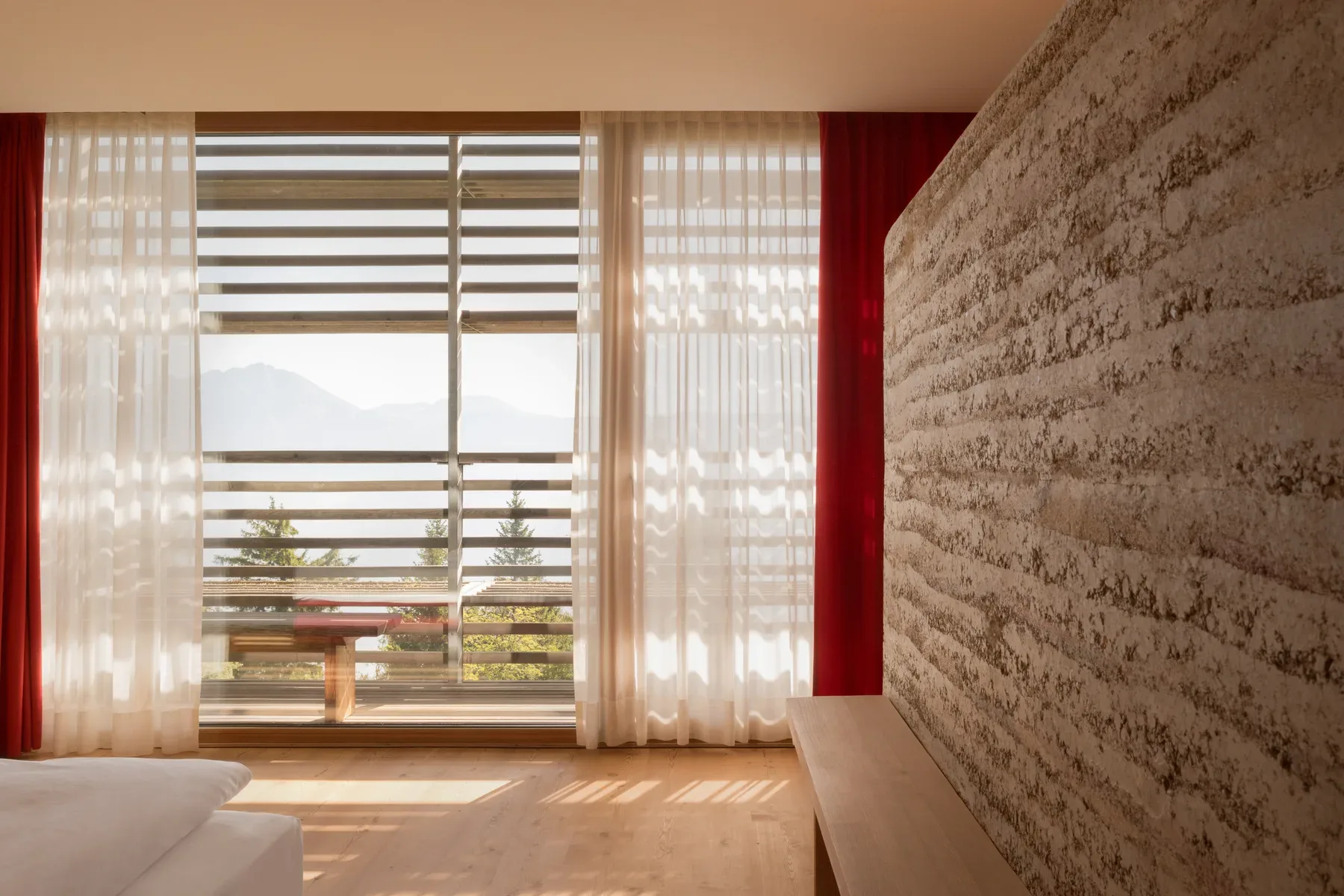
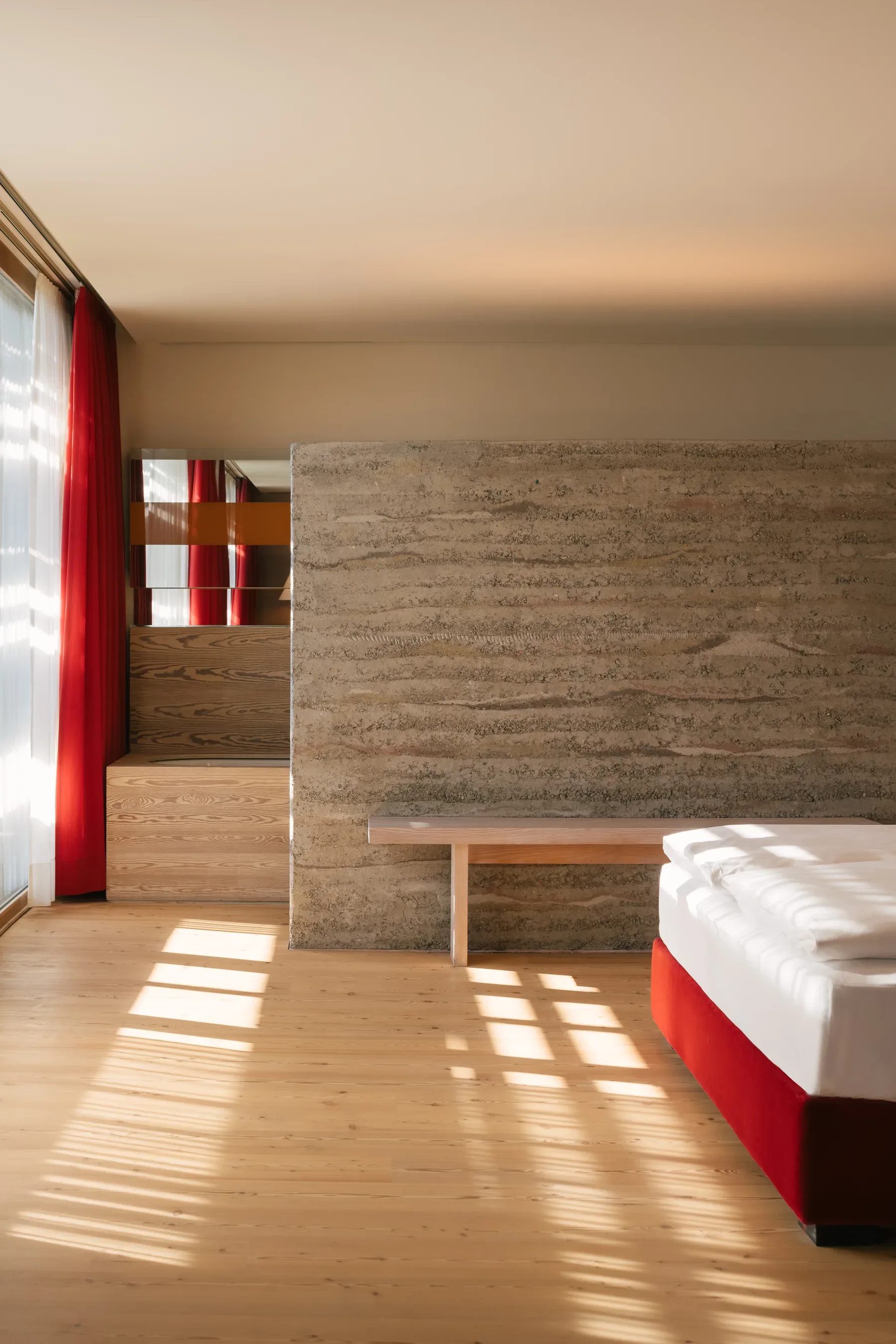
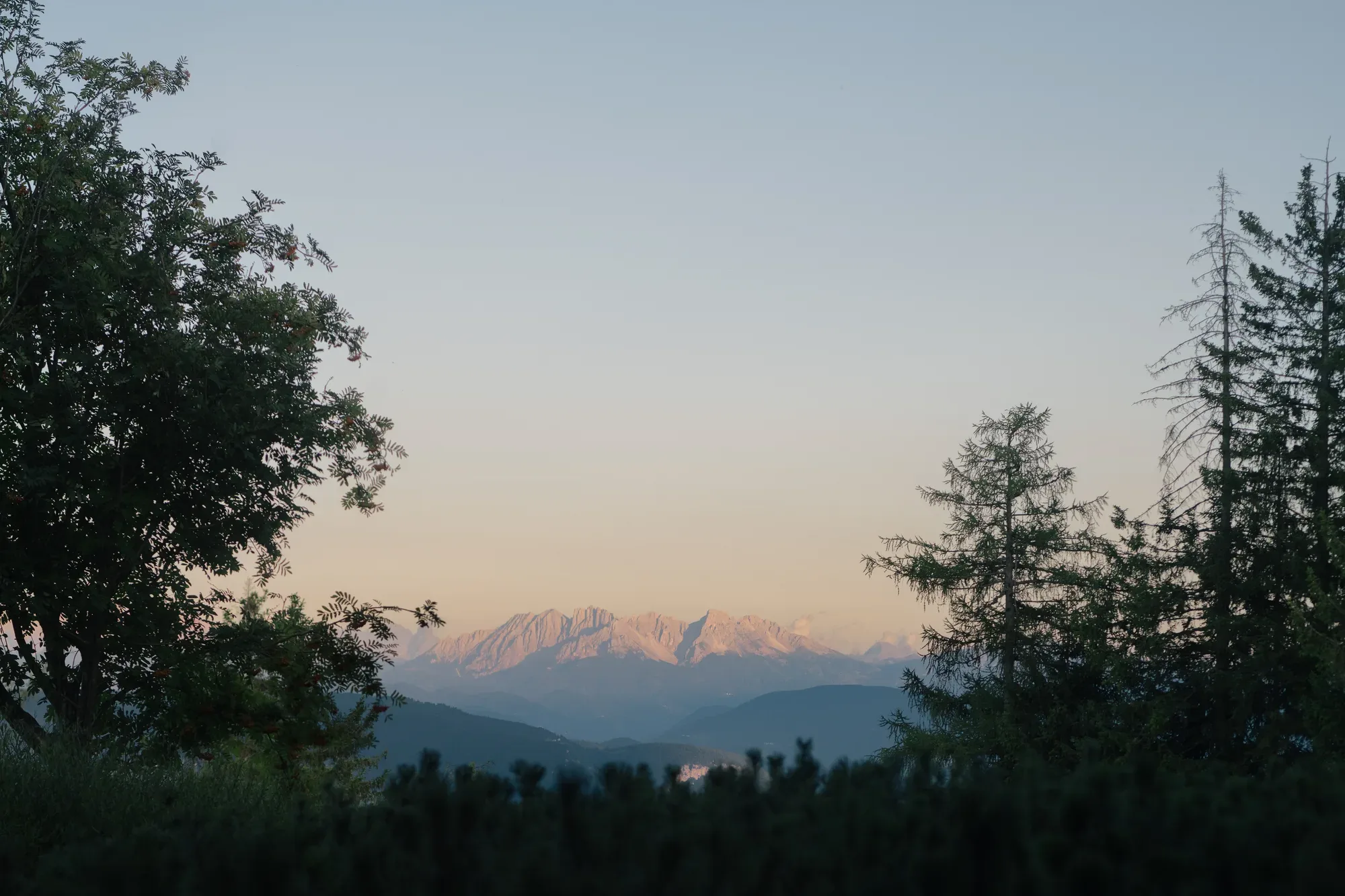
Which way your room faces shapes the day. Depending on their position, rooms look towards the Dolomites and get the morning sun, or face the forest and get the evening sun. There are 35 rooms of 36 square metres and six suites of 72 square metres. Superior rooms open onto the garden, Deluxe rooms have a balcony, and the suites have one or the other.
Every category has large windows, a bathtub and a separate shower. In the Superior rooms the bathroom is open; in the Deluxe rooms a wall of natural clay separates it from the bed. The suites have their own living area with South Tyrolean farmhouse furniture.
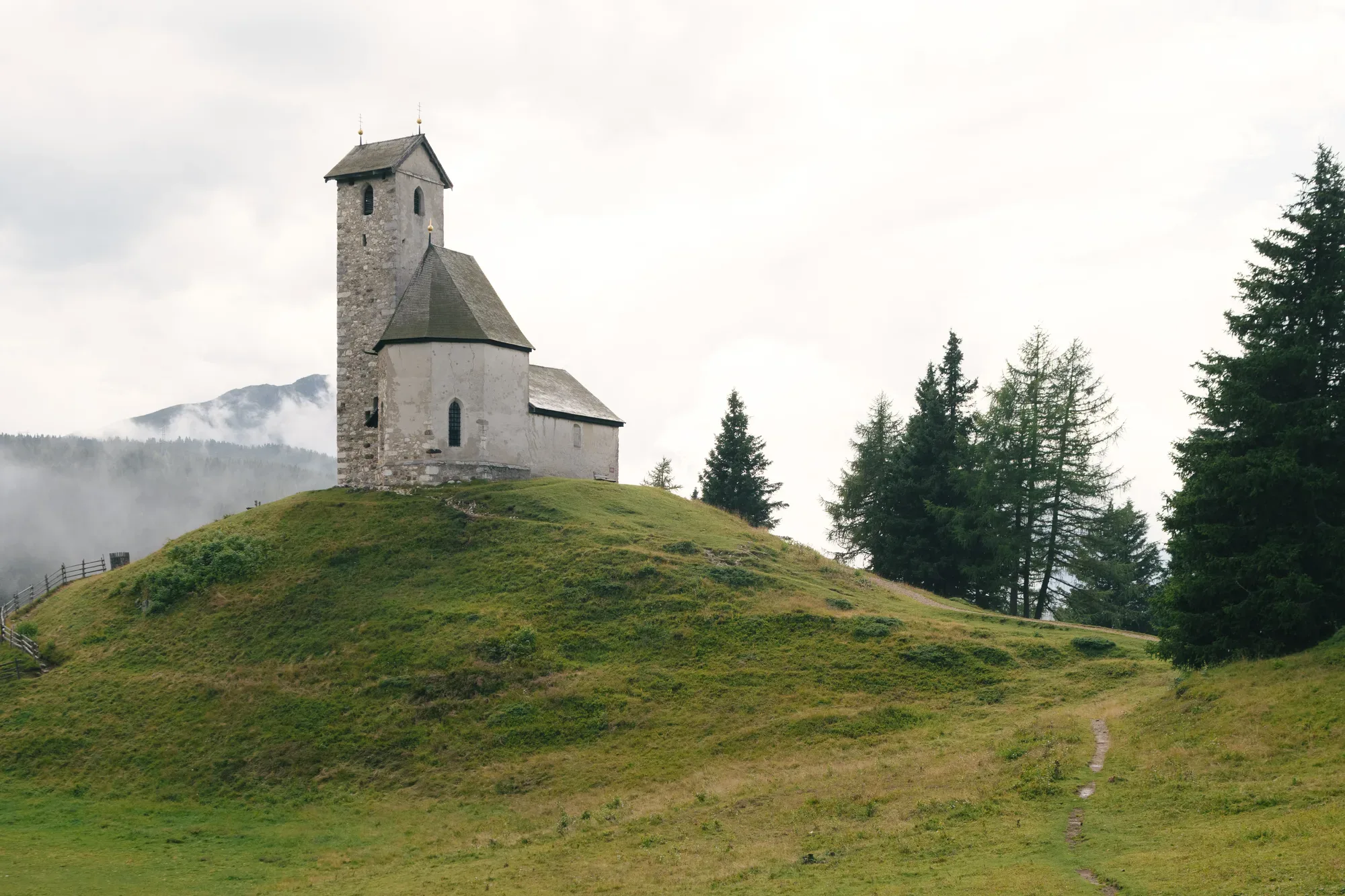
Outside, trails lead off in every direction; the cable-car operator counts more than 100 kilometres of them. An old single chairlift takes about 15 minutes to climb to 1,814 metres, close to the little church of St. Vigil with its 14th-century frescoes. The hotel offers guided hikes, mountain bikes and yoga, and in winter it provides snowshoes.
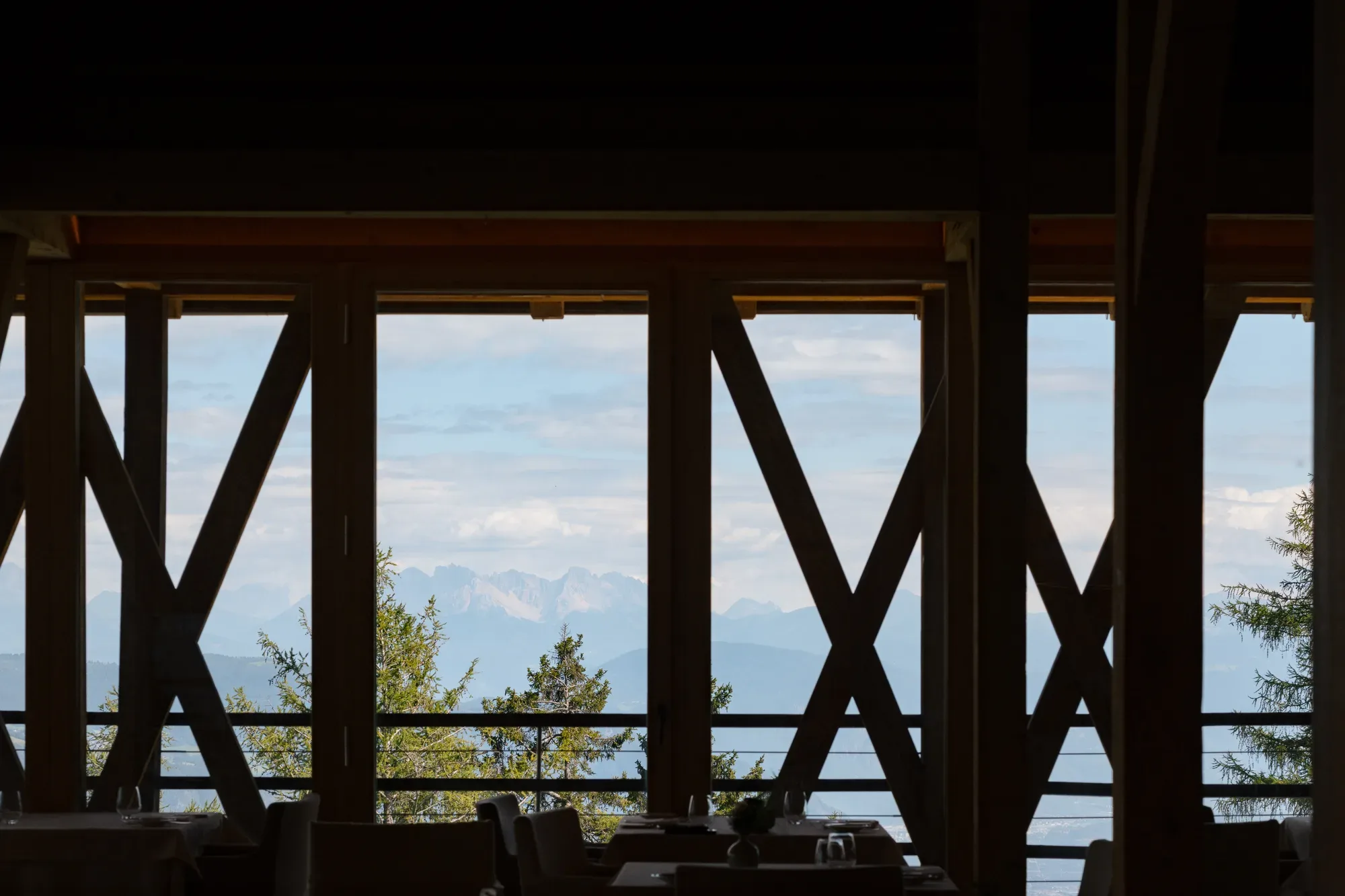
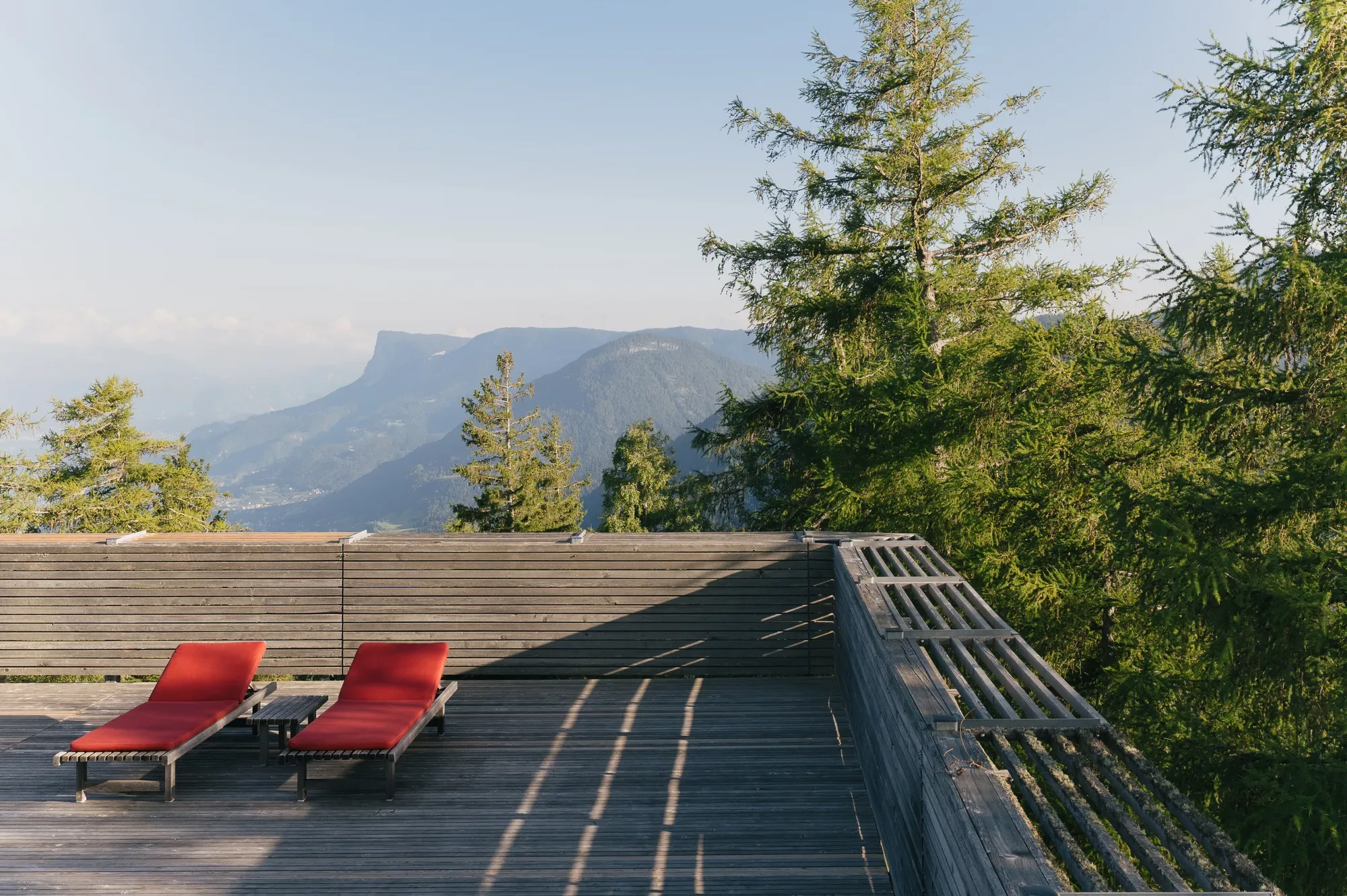
There are two places to eat. At Restaurant 1500, chef Daniel Sanin cooks regionally and with the seasons, with views over Lana and the valley; the evening menu changes daily, and breakfast is served here too. By day, Stube Ida serves South Tyrolean dishes and has a sun terrace. Its tiled stove, around a hundred years old, once heated the old mountain hotel.
Evenings follow the cable-car timetable, though less strictly than you might expect. For hotel guests there are extra runs until 11 pm, and later ones can be arranged for a fee, so dinner down in Lana is possible. If you want to eat in the village most evenings, a hotel in Lana is easier. Non-residents can come up for dinner at Restaurant 1500 by reservation.
On a wet day there is the Aquiléia Spa: 1,200 square metres with a 14-metre pool, indoor and outdoor whirlpools, a sauna, a steam room and an adults-only relaxation room. The hotel closes for a few weeks each spring, so check dates before you book.