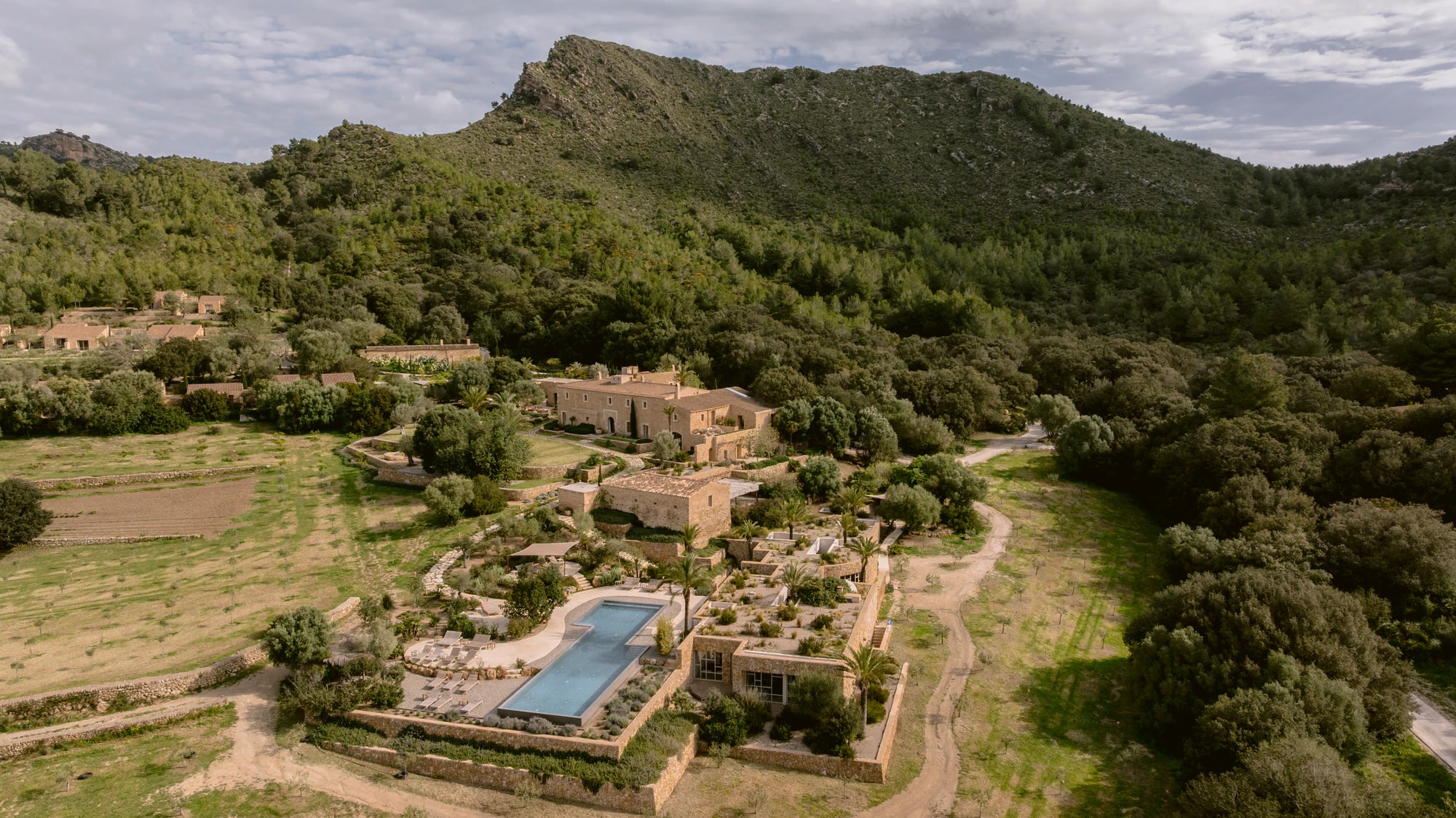
A quieter Mallorca: Artà or Santanyí?
East of the Serres de Llevant, sheep graze between holm oaks and the coves at the end of the road have no hotels. Further south, Santanyí's market fills the square twice a week, and Mondragó Natural Park is a short drive away. Here is how the two areas differ, where to walk and swim, and when the coast gets busy.
A quieter Mallorca comes down to where you stay and when you go. The east of the island has two areas that feel quite different. Around Artà in the northeast you are in the countryside, among fields, woodland and the hills of the Llevant Natural Park. Santanyí in the southeast is a small town with a market and cafés, and the coves of the south-east coast are a few kilometres away.
You will want a hire car in either area, because the coves, trailheads and hermitages lie outside the towns. Four or five days is enough for one area; allow a week, with a change of hotel, to see both. The two hotels are about 55 km apart by road.
In each area we introduce one hotel from our selection: Es Racó d’Artà and Can Ferrereta. You will find other places to stay on our Mallorca page, and Mallorca in three hotels looks at three of them.
At a glance
- Getting there: from Palma airport it is about 74 km by road to Artà and about 50 km to Santanyí.
- Landscape: around Artà the hills and woods of the Serres de Llevant, with the natural park a few kilometres from the hotel; around Santanyí rocky coast, coves and Mondragó Natural Park, 7 to 12 km away.
- Market days: Tuesday in Artà, Wednesday and Saturday in Santanyí, when both town centres fill up in the morning.
The northeast: Artà and the Llevant Natural Park
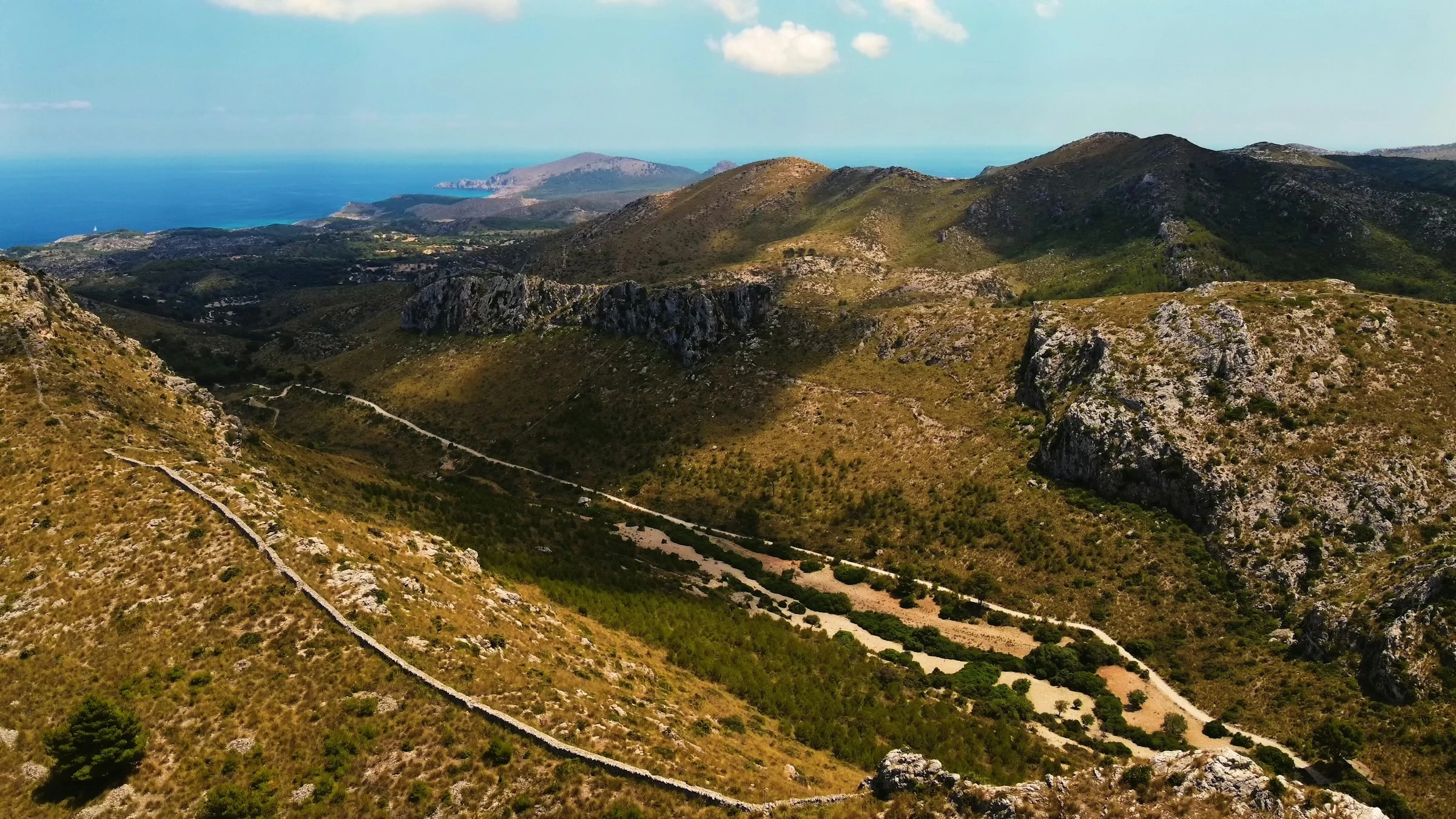
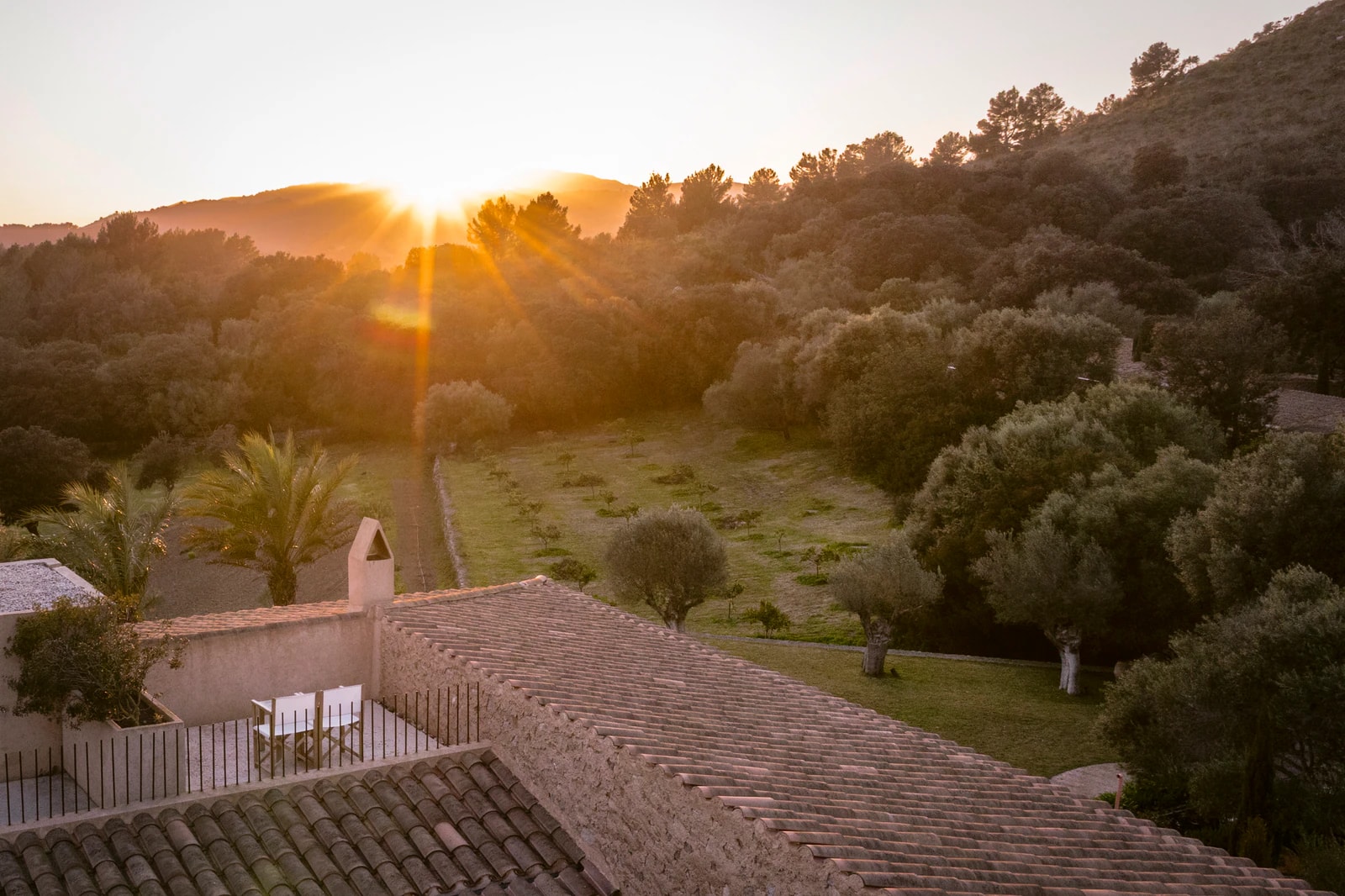
Artà is a country town below the walled hill of Sant Salvador. To the north and east rise the Serres de Llevant, much of which is protected as the Llevant Peninsula Natural Park. Between its summits, Talaia Freda and Bec de Ferrutx, lie holm oak and pine woods, garrigue, old farm estates and undeveloped coves.
For walkers the park is the real draw. The park authority lists more than 30 routes, among them the climb to Talaia Freda, the path from s’Alqueria Vella to es Verger, the Camí dels Presos and the route to the Talaia de Son Jaumell watchtower. The park also holds the remains of a camp where Republican prisoners were made to do forced labour in 1941. Many walks start from the s’Alqueria Vella de Baix information centre, which has maps and audio guides: take the Ma-3333 from Artà towards Betlem and turn off at kilometre 4.7. It is open daily from 9am to 4pm (as of October 2026).
The park authority advises carrying plenty of water in summer: the routes are long and short on shade, there is often no mobile signal, and the fire risk is high. Donkeys, sheep and cattle graze the land, so leave gates as you find them.
What to do in the northeast
Three outings worth making from Es Racó d’Artà, all between four and twelve kilometres from the hotel.
Ermita de Betlem
About ten kilometres north of Artà, a little over twelve from the hotel, stands the hermitage of Betlem, founded by hermits in 1805. You can reach it by a winding road or on foot: the park authority lists both the old path up to the hermitage and the route from Betlem down to Caló de Ferrutx. The Font de Na Bernadeta spring is some 50 metres away.
Ses Païsses
On the southern edge of Artà, about four kilometres from the hotel along the Camí de sa Corballa, Ses Païsses is one of the best-preserved Talayotic settlements on Mallorca: an oval site under holm oaks, enclosed by a wall with a massive gateway. In summer it opens Monday to Friday from 10am to 5pm and on Saturdays until 2pm; in winter Monday to Saturday from 10am to 2pm. It is closed on Sundays and public holidays, and entry costs 4 euros (as of October 2026).
Cala Torta and Cala Mitjana
Cala Torta, Cala Mitjana and Cala Estreta, the three undeveloped coves of the northeast, lie inside the park along the same road as Es Racó d’Artà, about eight kilometres from the hotel. At about 150 metres, Cala Torta is the largest beach in the municipality, with fine pale sand and a seabed that shelves quickly. Bring your own water and shade. Since 2024 the access track has been closed to private cars: you park before the barrier and walk 15 to 20 minutes. The coves are not empty in high summer. They are quieter early in the morning, in the evening and outside July and August.
Es Racó d’Artà: a finca in the hills
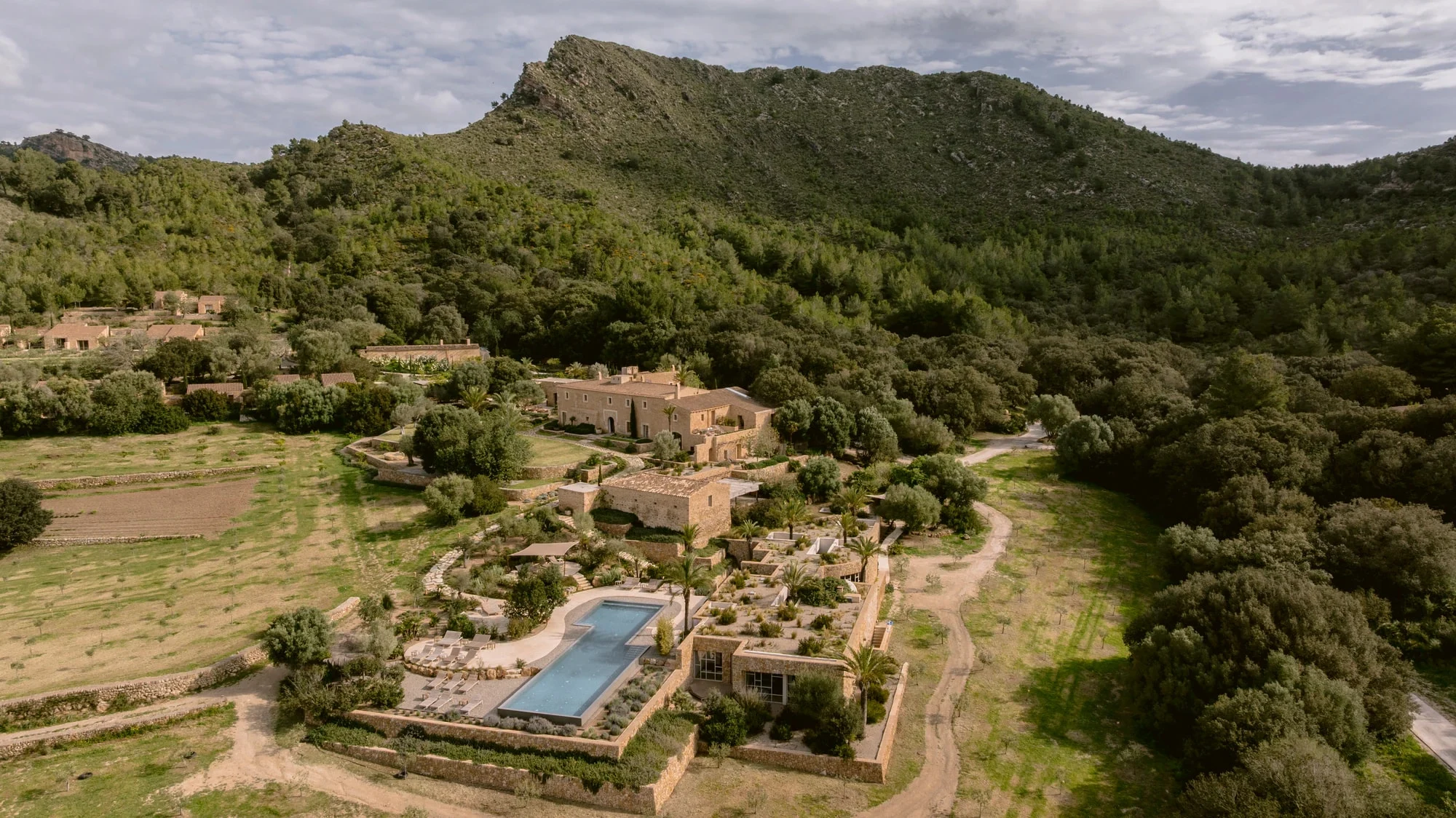
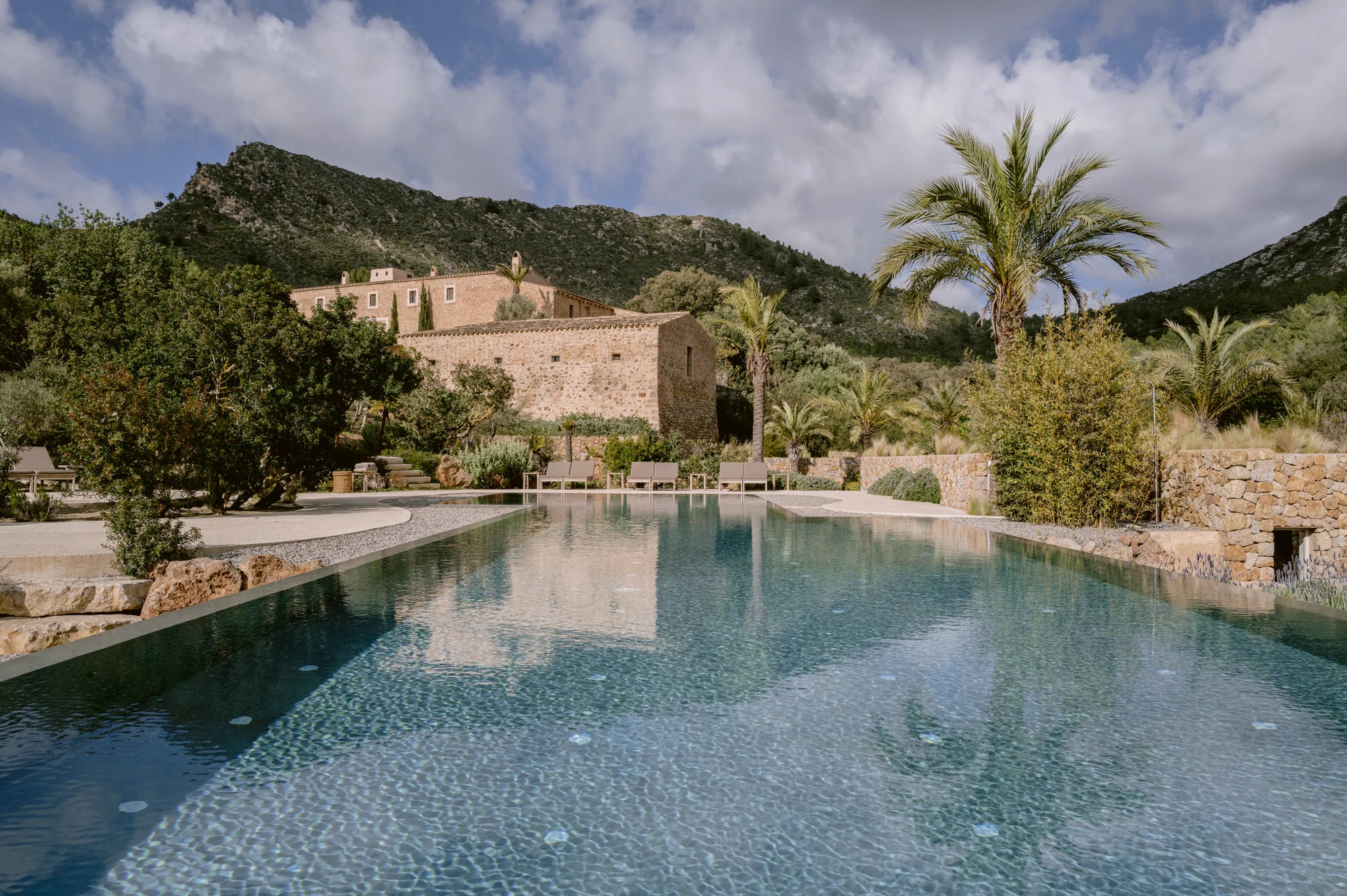
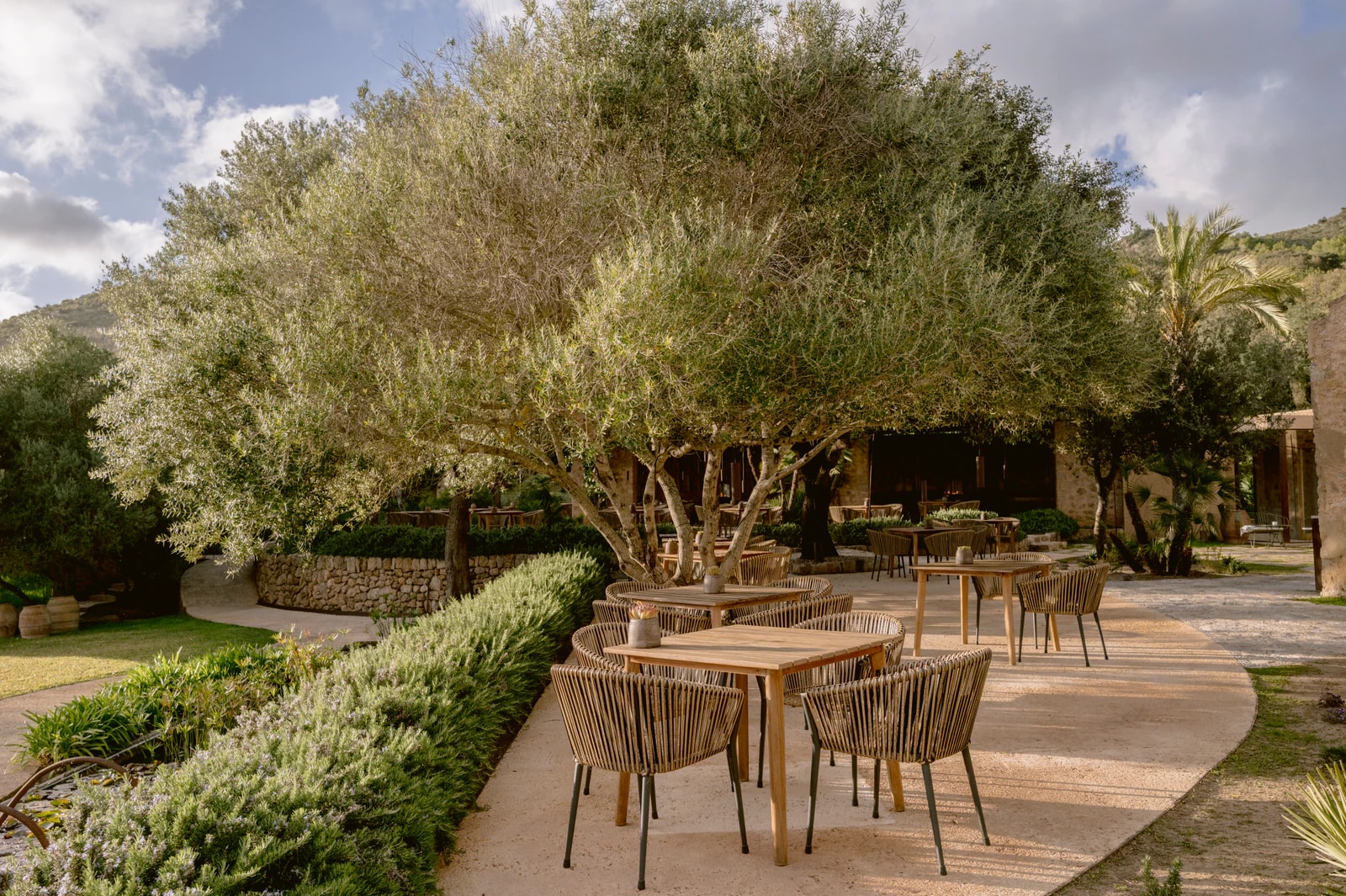
Es Racó d’Artà spreads around an old finca on the Camí dels Racó, the road to Cala Mitjana, a few kilometres northeast of Artà. Antoni Esteva and Jaume Danús farmed the land again before turning the old estate buildings into a hotel. Cars stay in the car park at the entrance, and an electric buggy takes guests the rest of the way.
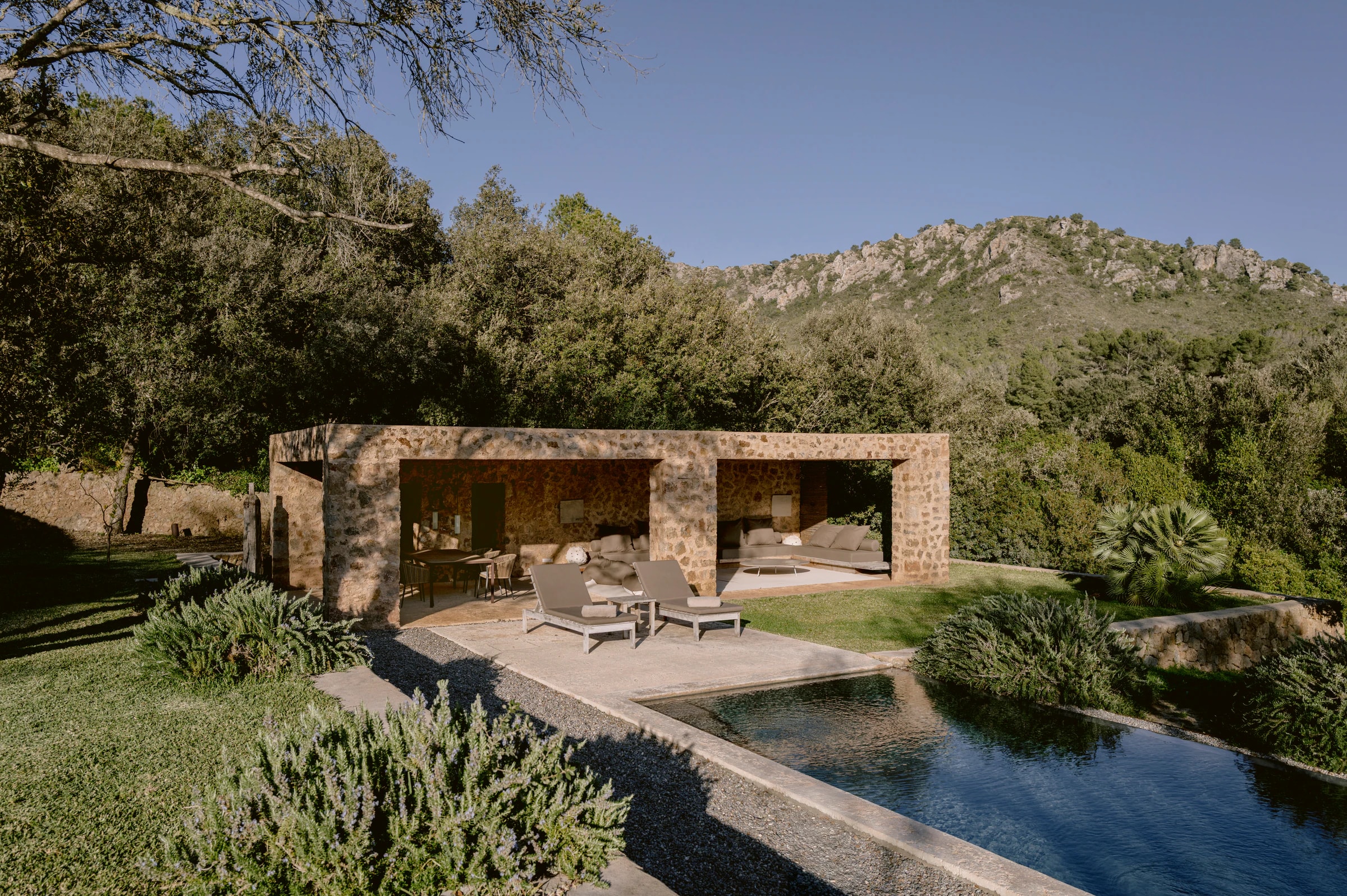
How much space you have depends on where you sleep. The main house, Sa Possessió, has eight rooms and suites. The 21 casitas sit in the woods, each with a terrace and an outdoor shower; five have their own pool. For more room there are two standalone houses, Sa Meva Casa and Sa Finqueta, set a little apart from the rest of the hotel.
At the hotel: programmes, spa and kitchen
Meditation and yoga take place every morning at eight and are included in the stay. For longer stays the hotel offers programmes over several days, with yoga, walks and crafts. The spa, with indoor and outdoor saltwater pools, is another focus. Guests in Sa Finqueta have two e-bikes to use.
Meals are served at Beni Axir, the hotel restaurant, where María Solivellas cooks Mediterranean food with vegetables from the estate's gardens and produce from small local suppliers. Out in the countryside that is a practical point: nobody needs to get back in the car in the evening. Our portrait Es Racó d’Artà: the other Mallorca tells more about the hotel.
The southeast: Santanyí and Can Ferrereta
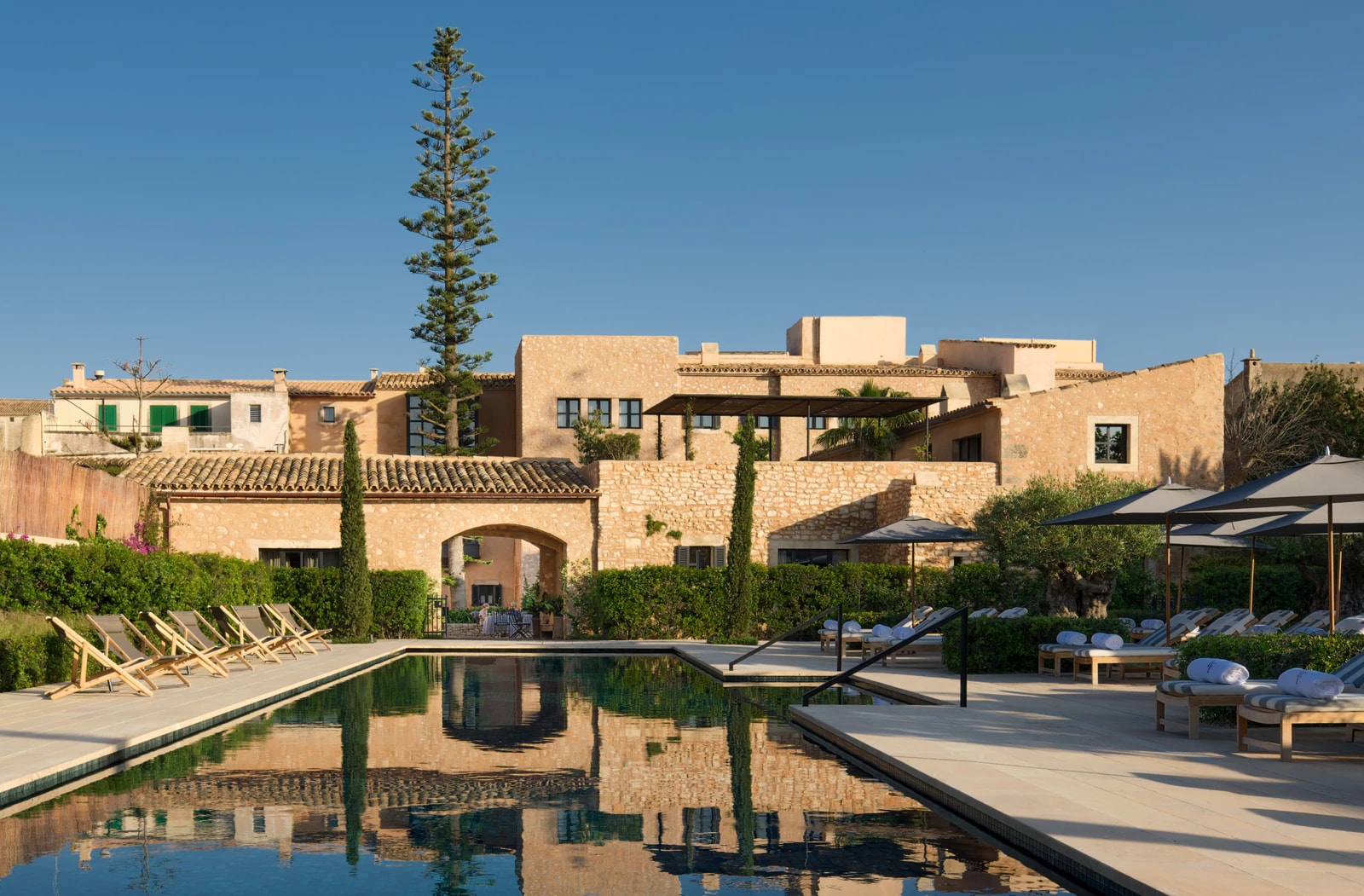
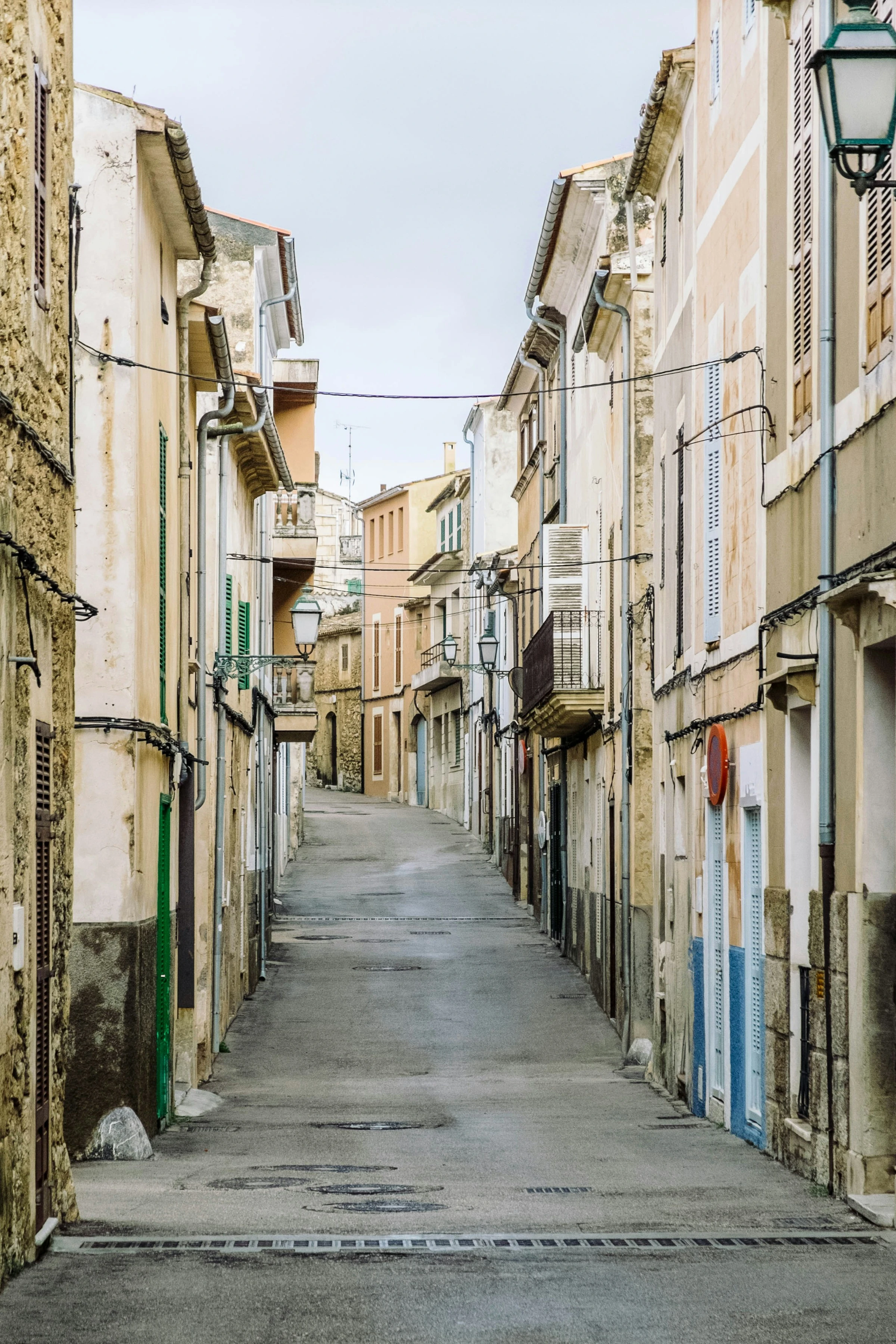
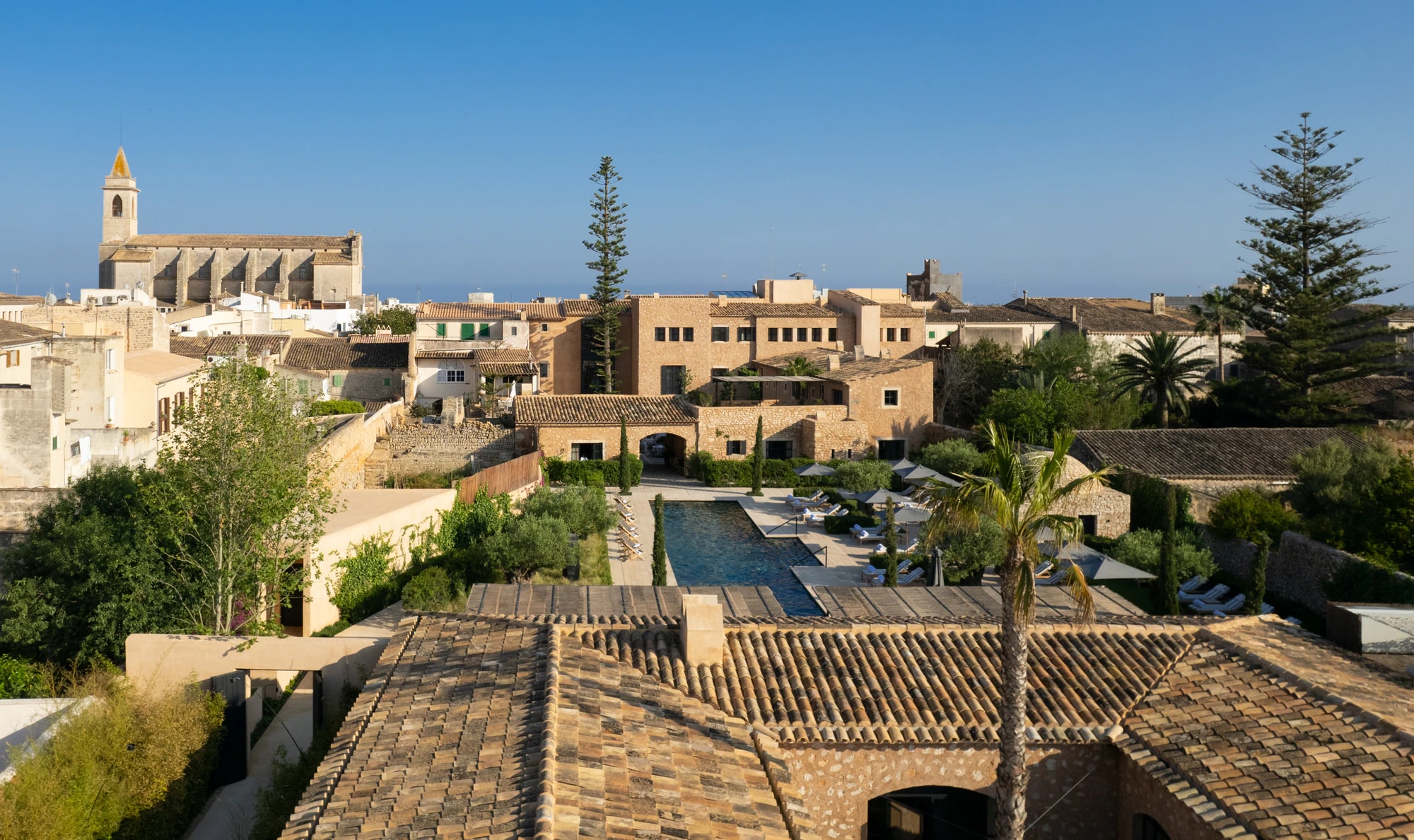
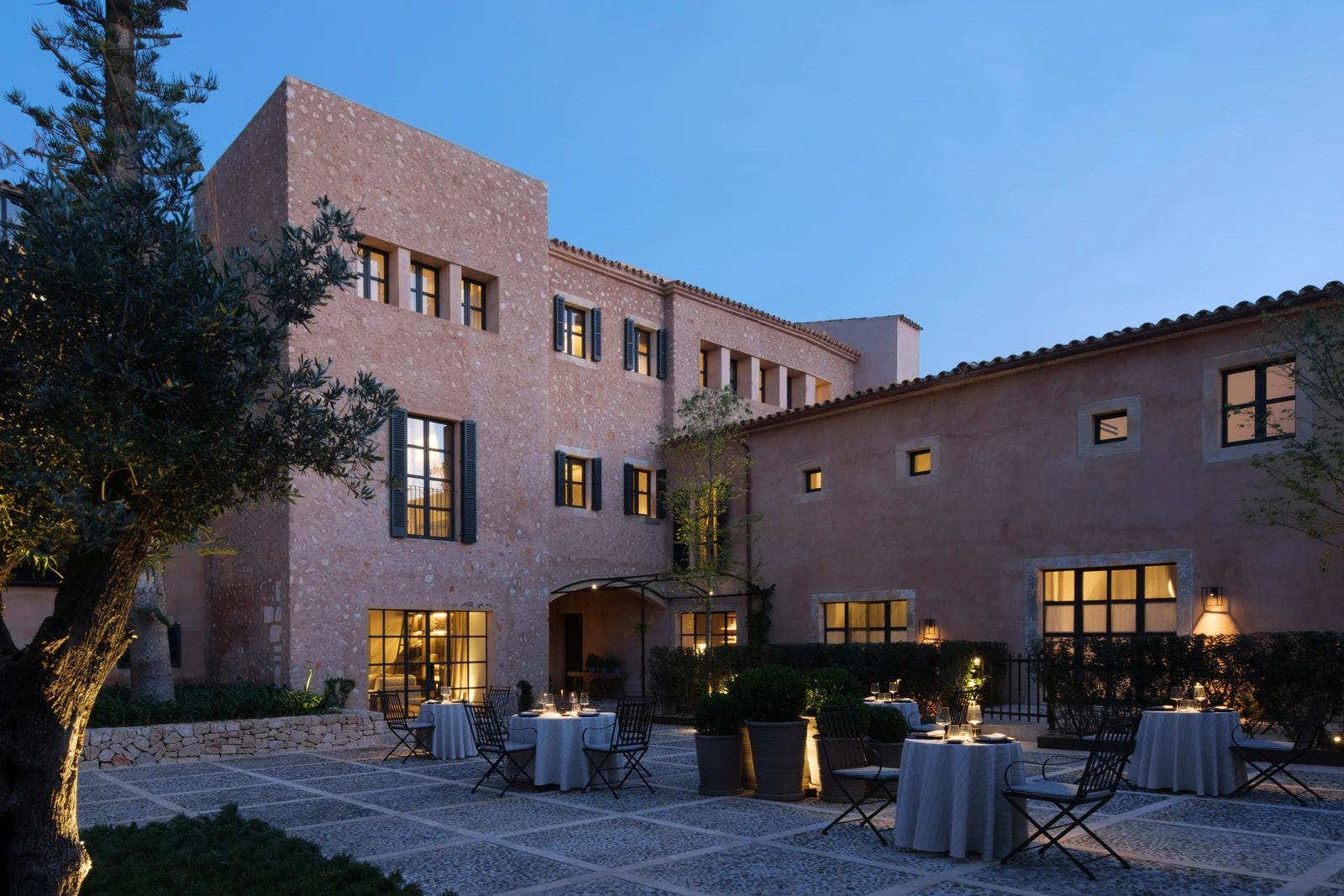
Can Ferrereta is a 17th-century mansion in the centre of Santanyí, at Carrer de Can Ferrereta 12, a short walk from the Plaça Major. The Soldevila-Ferrer family is behind the hotel, and Bastidas Architecture designed the conversion. Stone arches, timber beams and the pale local sandstone sit alongside modern additions, and there is a garden with a pool.
The hotel has 13 rooms and 19 suites across three buildings. You can stay in the historic building, over two levels in the Duplex Suite, or in a Terrace Suite with a private garden. Only the Pool Suite has a private pool.
What to do in the southeast
Three outings, all within twelve kilometres of Can Ferrereta.
Santanyí market
On Wednesdays and Saturdays the market spreads around the Plaça Major, with fruit and vegetable stalls in front of the church. Can Ferrereta is only a few metres away, so on those mornings it is busy outside the door, and in summer the council adds more stalls. For smaller markets, try the villages in the municipality: Cala Figuera on Mondays, s’Alqueria Blanca on Tuesdays and es Llombards on Thursdays.
Mondragó Natural Park
Mondragó, protected since 1992, takes in woodland, dry-stone walls, dunes, two wetlands and rocky shore. Five signposted walks take between 15 and 60 minutes and are easy going. Two car parks with toilets sit close to the beaches: at s’Amarador, about seven kilometres from Can Ferrereta, and at Ses Fonts de n’Alis, about twelve. Both charge in summer and are free out of season. The information centre by the Ses Fonts de n’Alis car park is open daily from 9am to 4pm (as of October 2026), and free guided walks can be arranged in advance through the park office.
Cala Llombards and Es Pontàs
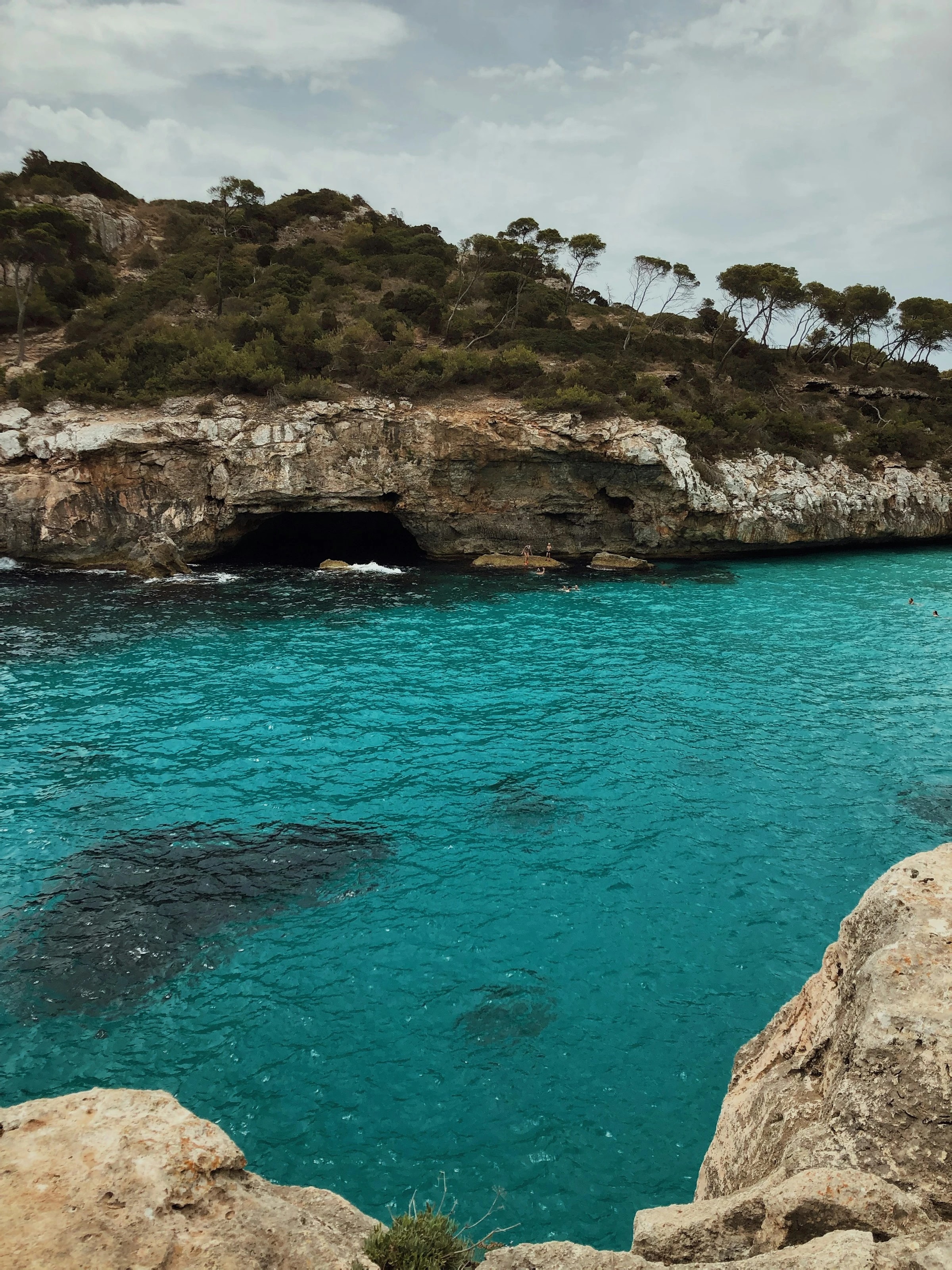
About seven kilometres south of Santanyí, Cala Llombards sits at the mouth of a seasonal stream, with pale sand between pines and rocks; steps and rock shelves also lead into the water from the sides. You park in the small settlement above. Nearby is the Es Pontàs rock arch, visible from the cliffs. The cove is small and so is the car park, and in July and August both fill up early. It is at its best in the morning and outside the main season.
At the hotel: art, a garden, two restaurants
Contemporary art runs through the rooms and outdoor spaces, including works by Joan Miró. For time by the water there is the garden pool and the Sa Calma spa with its indoor pool. Can Ferrereta is not a beach hotel; the hotel itself suggests Mondragó Natural Park and Es Trenc beach as outings.
You do not have to leave the hotel to eat. Ocre, in the old wine cellar, serves Mediterranean cooking with island produce. La Fresca sits by the pool in the garden and is the more relaxed of the two.
Market days and busy coves
Artà is a sleepy country town on most days but packed for the Tuesday market, roughly 10.30am to 1.30pm; the council itself notes how crowded the centre gets. To see the town at a slower pace, come on another day and climb up to Sant Salvador. Santanyí is livelier, with galleries, cafés and two market days, and Can Ferrereta puts you right in the middle of it.
On the coast the season decides. The undeveloped coves near Artà and the beaches in Mondragó Natural Park are busy in July and August and much quieter in spring and autumn. None of these coves is a secret. In high summer, go to the water before 10am or after 5pm, walk the coastal paths between the coves, and spend the middle of the day in the shade, under the holm oaks at Ses Païsses for instance.
When to go
For quiet and walking, April to June and mid-September to October are the best months. Long-term averages for Palma airport give around 24°C by day in May, with some 280 hours of sunshine, and much the same in October, which is also the wettest month. July and August reach about 31°C, when long hikes in the shadeless hills around Artà only make sense early in the morning. In winter, highs sit around 15 to 16°C: good for walking, not for swimming. Es Racó d’Artà is open from February to November.
In short
Es Racó d’Artà gives you space outside town: woodland, gardens and the natural park on the doorstep. It suits anyone who wants to walk a lot and drive little, or to build yoga, meditation or the spa into the stay.
Can Ferrereta offers a garden retreat in the centre of Santanyí, with art and two restaurants at the hotel. It suits anyone who likes a morning walk through the market, short drives to the coast and treating the beach as a day out.
If you want both, split your stay: a few days of hills and coves in the northeast, then town and coast in the southeast.
Before you book
Both hotels take guests aged 14 and over; the spa at Es Racó d’Artà is open to guests from 16. Private pools come only with certain room categories, and at Can Ferrereta only with the Pool Suite.
Sources (18), checked 1 October 2026
- Govern de les Illes Balears: Parc Natural de la Península de Llevant (routes, information centre, advice; version of 18 May 2026)
- Govern de les Illes Balears: Parc Natural de Mondragó (walks, car parks, information centre; version of 27 April 2026)
- Illes Balears Travel: Parc natural Mondragó
- Illes Balears Travel: Ermita de Betlem
- Illes Balears Travel: Cala Llombards
- Ajuntament d’Artà: Poblat talaiòtic de ses Païsses (opening hours, admission)
- Artà Travel (Artà town council): Ses Païsses
- Artà Travel (Artà town council): Ermita de Betlem
- Artà Travel (Artà town council): Sant Salvador
- Artà Travel (Artà town council): Mercat setmanal d’Artà
- Artà Travel (Artà town council): Cala Torta
- East Mallorca (Mapas): Cala Torta
- Ajuntament de Santanyí: weekly markets in the municipality
- AEMET: climate normals, Palma de Mallorca airport (1981–2010)
- Can Ferrereta: hotel website (rooms, location, market, surroundings)
- Es Racó d’Artà: hotel website (address, rooms, restaurant, spa, season)
- Guide Michelin: Es Racó d’Artà
- OpenStreetMap: coordinates and road distances (Nominatim, OSRM)